
The Hawaiian Vinegar Company Turns Chocolate into Vinegar
Brandon Askew of the Hawaiian Vinegar Company first began experimenting with fermentation in his mom’s basement in Madison, Wisconsin while he was in high school. “I learned you could make wine from honey — I was more excited about the thick rich foam than the alcohol,” remembers Askew, who cared less about the output than the transformation process at the time. In college in Memphis, his Trinidadian roommate taught him how to make pea (pod) wine by boiling empty pea pods in water, adding sugar to the strained liquid, raisins, orange juice, sometimes black tea and a package of wine yeast to get fermentation going.
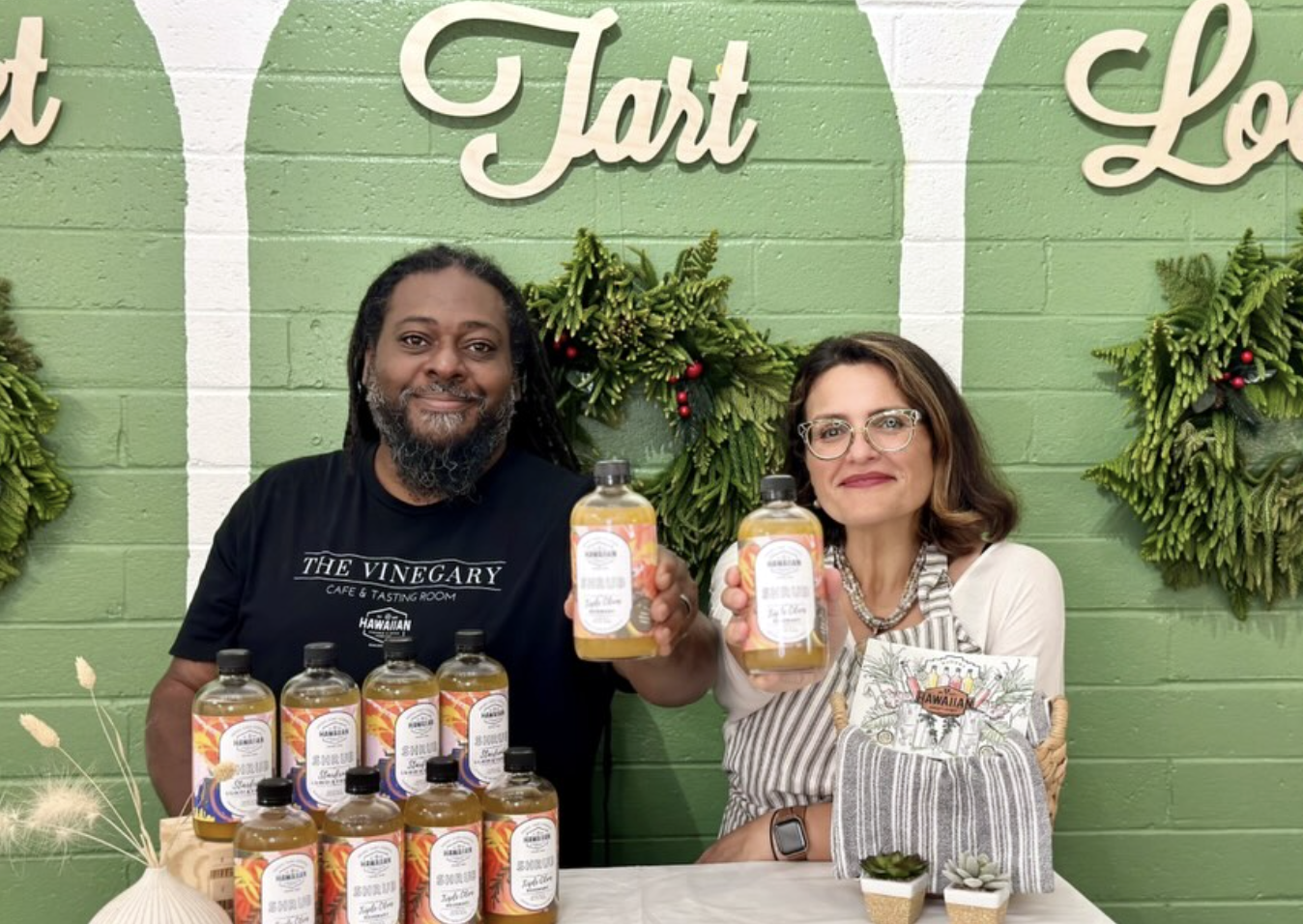
But twenty years ago, when he and his wife Poni decided to move from Tennessee back to her hometown of Mililani, in Central Oahu, fermentation wasn’t part of the plan. The two launched Eat the Street, a food truck event that they ran for ten years. What began with ten trucks in a parking lot turned into dozens of trucks and thousands of attendees. It was all about creating a new platform for food vendors and outlets for small, local artisans in the city.
In 2020, they shifted their focus. Knowing that the nutrient-rich soil of Oahu can foster a diverse group of crops, the two endeavored to start from the ground up — growing niche produce that artisan food vendors needed for their recipes. “We learned quickly that we were not farmers,” admits Brandon, so instead he started buying off grade produce, such as mangoes that weren’t right for market (e.g. bruised, blemished, too big/small …), in an attempt to upcycle products that would otherwise go to waste.
“Hawaii imports 90% of everything we consume,” Askew addressed, considering the impact of sustainability by supporting farmers through purchasing their scraps. The plan was to buy these underappreciated ingredients and transform them into something with added value. He didn’t want the produce for free, rather, he built trust with farmers, supporting them by promising to buy any surplus, a kind-of collaboration post-season.
“I can say that I never really thought of vinegar to be honest,” says Brandon “It was my wife’s idea. She said, ‘you love to brew, why don’t you make some vinegar?’”
Citrus thrives in Hawaii’s tropical climate, as do so many other fruits: bananas, pineapples, mangoes, lililkoi (passion fruit) and guava to name a few. Brandon saw this surplus ripe (and overripe) fruits as a sign to start experimenting with acetic acid.

In 2018, Hawaiian Vinegar Company was officially established. The mission was to connect with farmers before their “opala” (trash) went to feed. “My first competitors were chickens and pigs,” jokes Brandon. The first vinegar he made was from tangerines. “We were driving down our street one stormy, rainy day, and there were two girls on the corner that had a table with a box of tangerines for sale from their tree. We bought them all.” He juiced the fruit, and lo and behold, nature took over and he didn’t even have to add yeast.
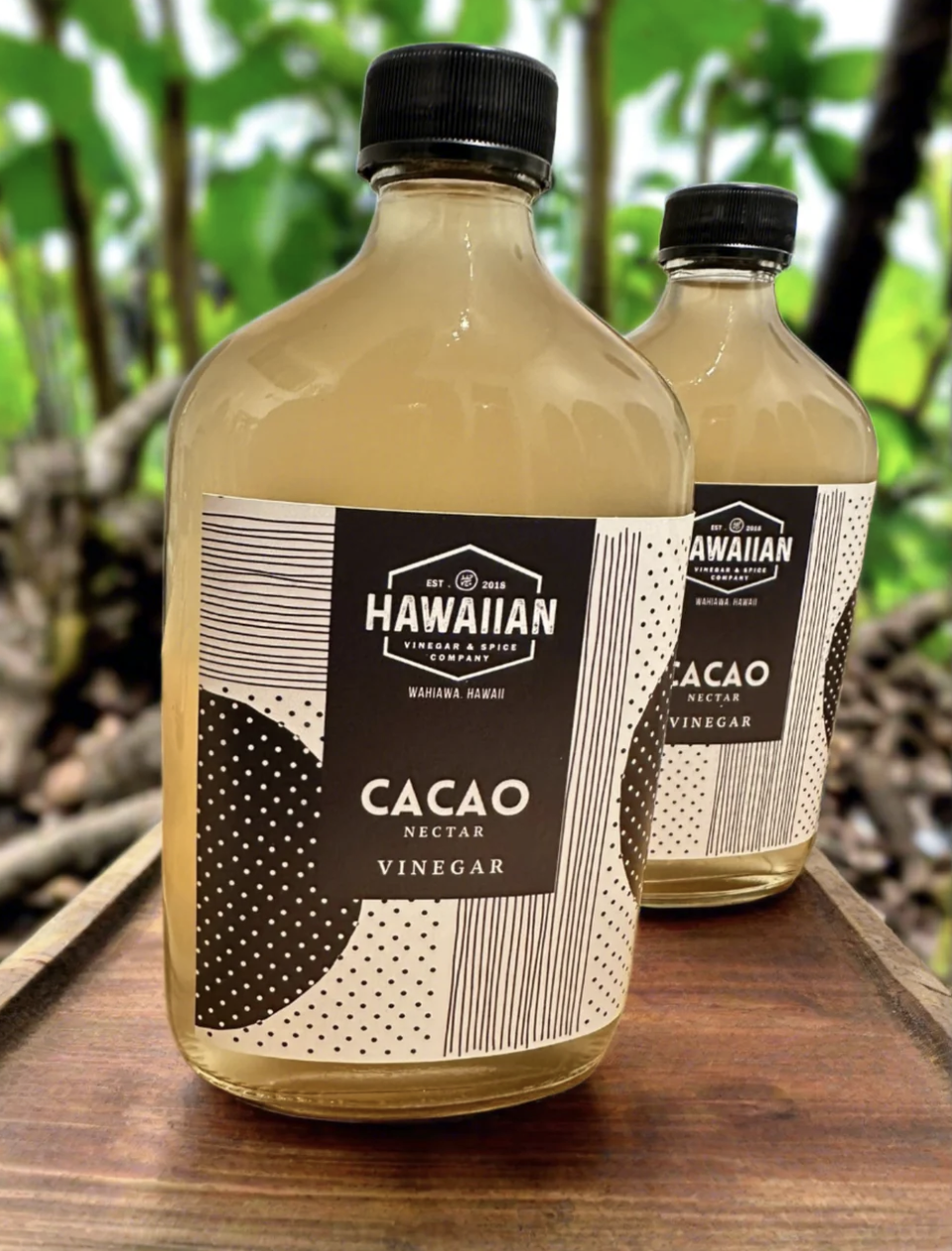
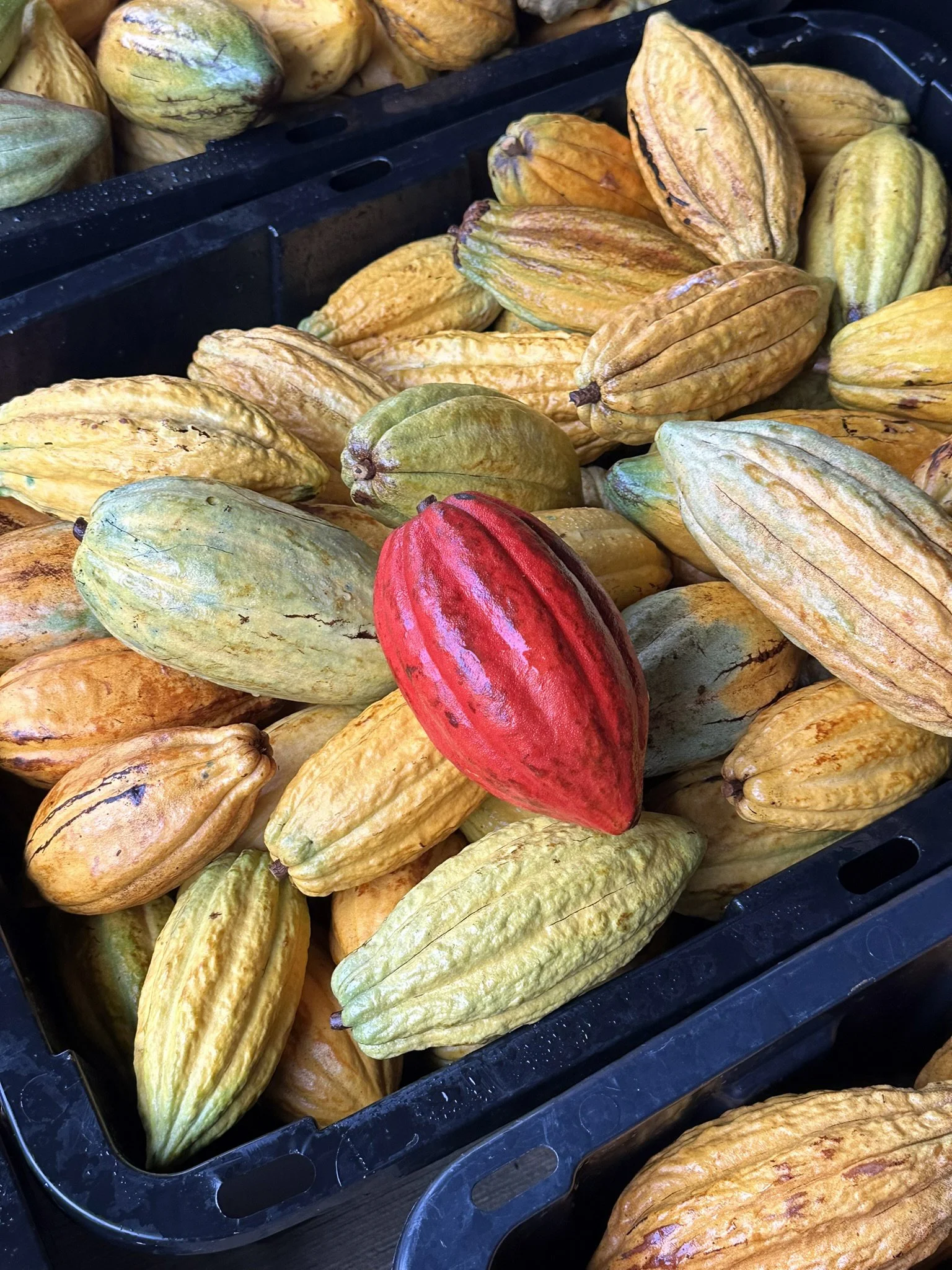
Then he came across cacao (aka cocoa bean). Hawaii is becoming a hub for chocolate making, as it has very unique terroirs for growing cacao that come through in the final product. “Someone told me, have you ever tried cacao nectar? It tastes like soursop and lychee,” Brandon says. And it did: with the tropical high tones of pineapple and citrus, and undertones of banana and coconut. He hadn’t tasted anything like it, and started to notice people selling jars of the juice on the Big Island. “I didn’t finish [drinking] the first jar, a few days later it fermented in the fridge; it had everything it needed to become vinegar.”
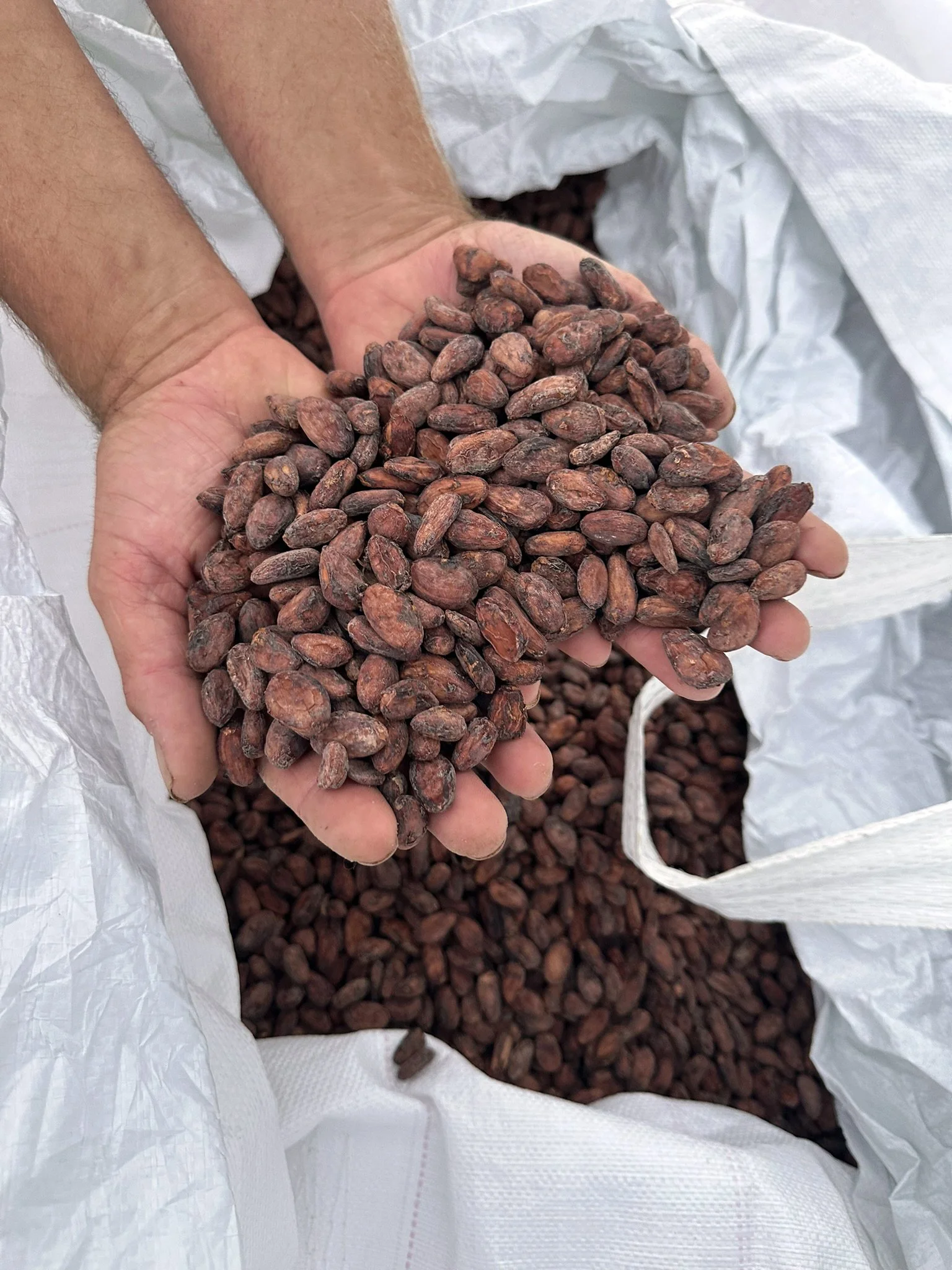
He found a farm in Kualoa Ranch, a huge tourist destination—it’s where Jurassic Park was filmed, and also a terrific place to grow cacao. He bought a 5-gallon bucket of cacao nectar from farmer Dan O'Doherty of Kualoa Grown and started making cacao nectar vinegar. That was a few years back, and now Askew has purchased over 100 gallons. He’s had a chance to go to the farm, harvest cacao, pull and pick the seeds, and witness the drying process. Askew’s also worked with Ben Fields from Mapele Fields, another grower and fermenter of cacao beans. Mapele Fields also ferments cacao beans from other farms, so Askew considers them one on the best sources for bulk cacao pulp.
The goal is to bring farming into the forefront of the world of fermentation, but it ended up enlightening Askew as to acetic acid’s already prominent role in the world of chocolate making! “As they crack it [the cacao] open and do an eyeball test to determine the quality of the bean,” advises Askew, ”there’s also a purple ring on the inside — that represents the bean went through a double fermentation process and acetic acid that naturally happens during cacao processing.” In other words, vinegar removes the bitterness from the bean that allows it to then become chocolate. “We wouldn’t have chocolate if we didn’t have vinegar,” Askew avows.