
In Bad Taste: Vinegar Valentines Sting
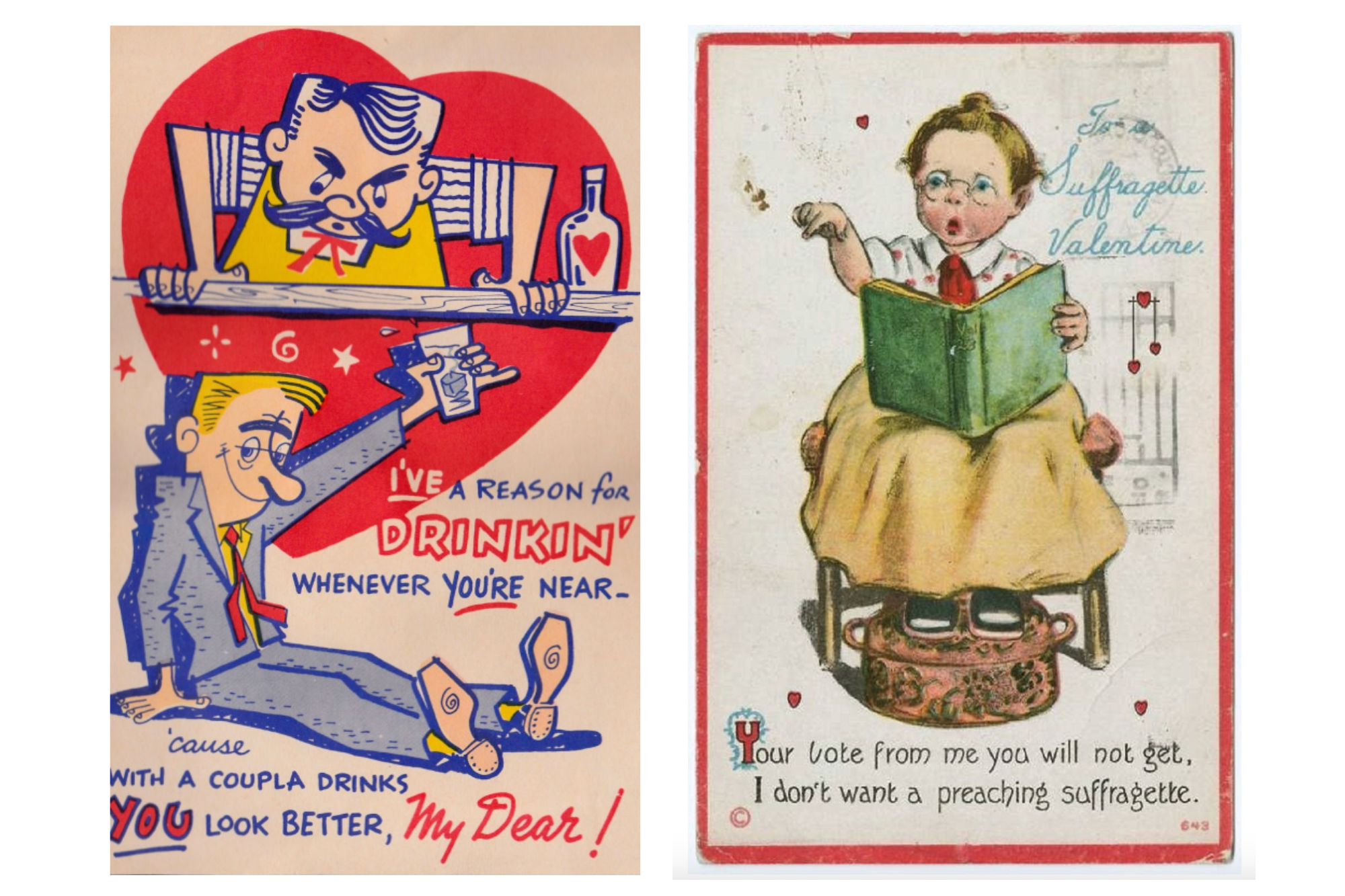
New York Public Library Digital Collection
Vinegar stings — it’s historically been used as a styptic during wartime and even in sterile surgical settings, and while it’s wonderful for wound care, the reputation of acetic acid burning beyond the battlefield.
A mid-19th century sensation called Vinegar Valentines satirizes the hallmark cards of the actual holiday. What began as Victorian era expressions combined with unflattering portraits and sharp, cutting quips, were antithetical, lampooning Valentine’s loving theme, thus became an acerbic sensation. What began in Britain in the mid 1800’s, came overseas and was onto by American greeting card companies in the 1930s, creating a category of messages, many of which were sent anonymously, which mocked people's looks and lifestyles, poking fun at their personalities.
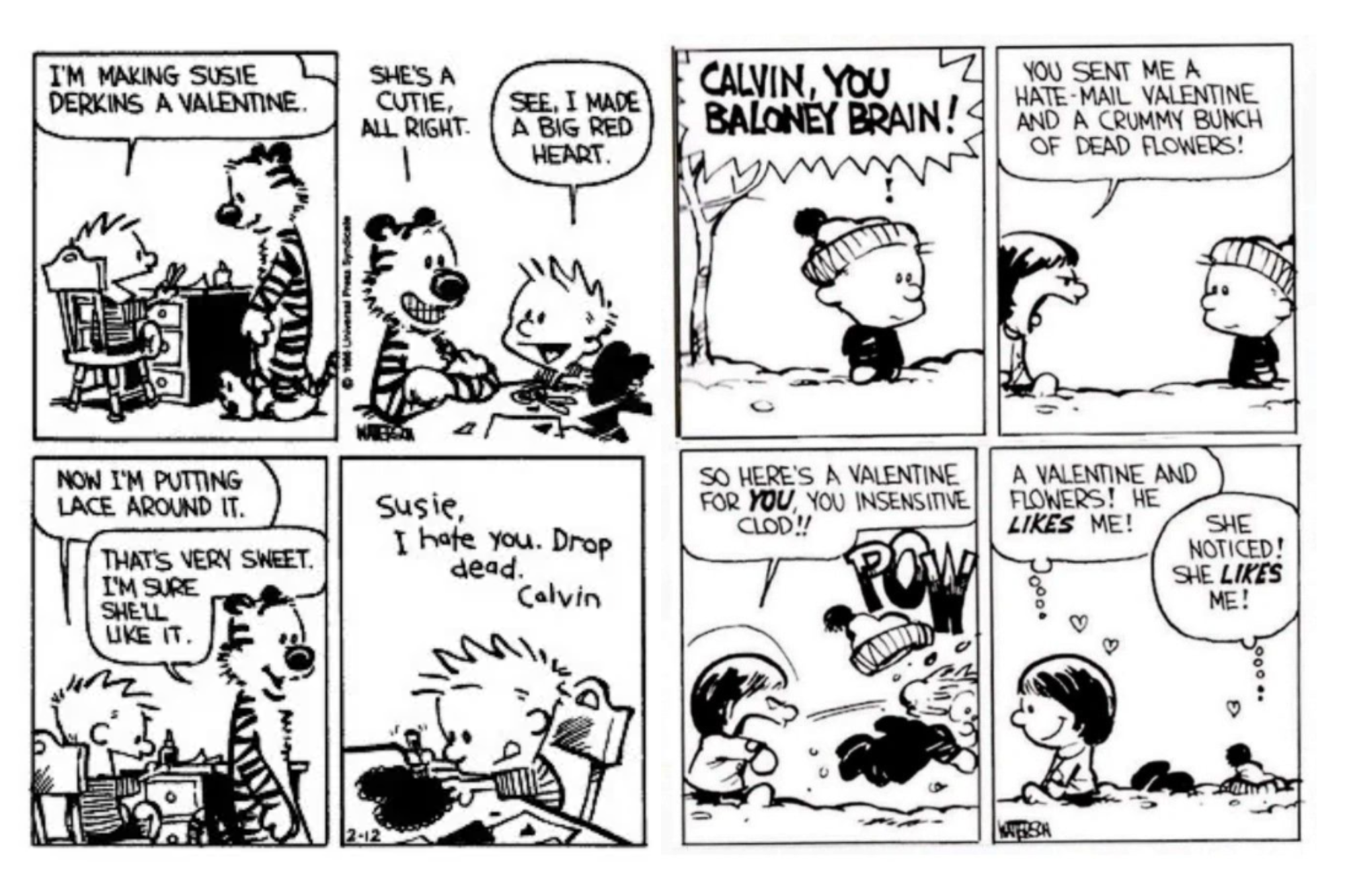
Bill Watterson
There are slanderous subgenres of sousing spouses, snide suffragettes and more — aka, the original trolling. Even as a kid I remember this kind of character-bashing comics; in Bill Watterson’s Calvin & Hobbes, Calvin, the main character writes his neighbor, Susie Derkins, what some may call “hate mail,” which, at least for them, masked their true feelings. That is not the case for Vinegar Valentines: they were often brutally honest.
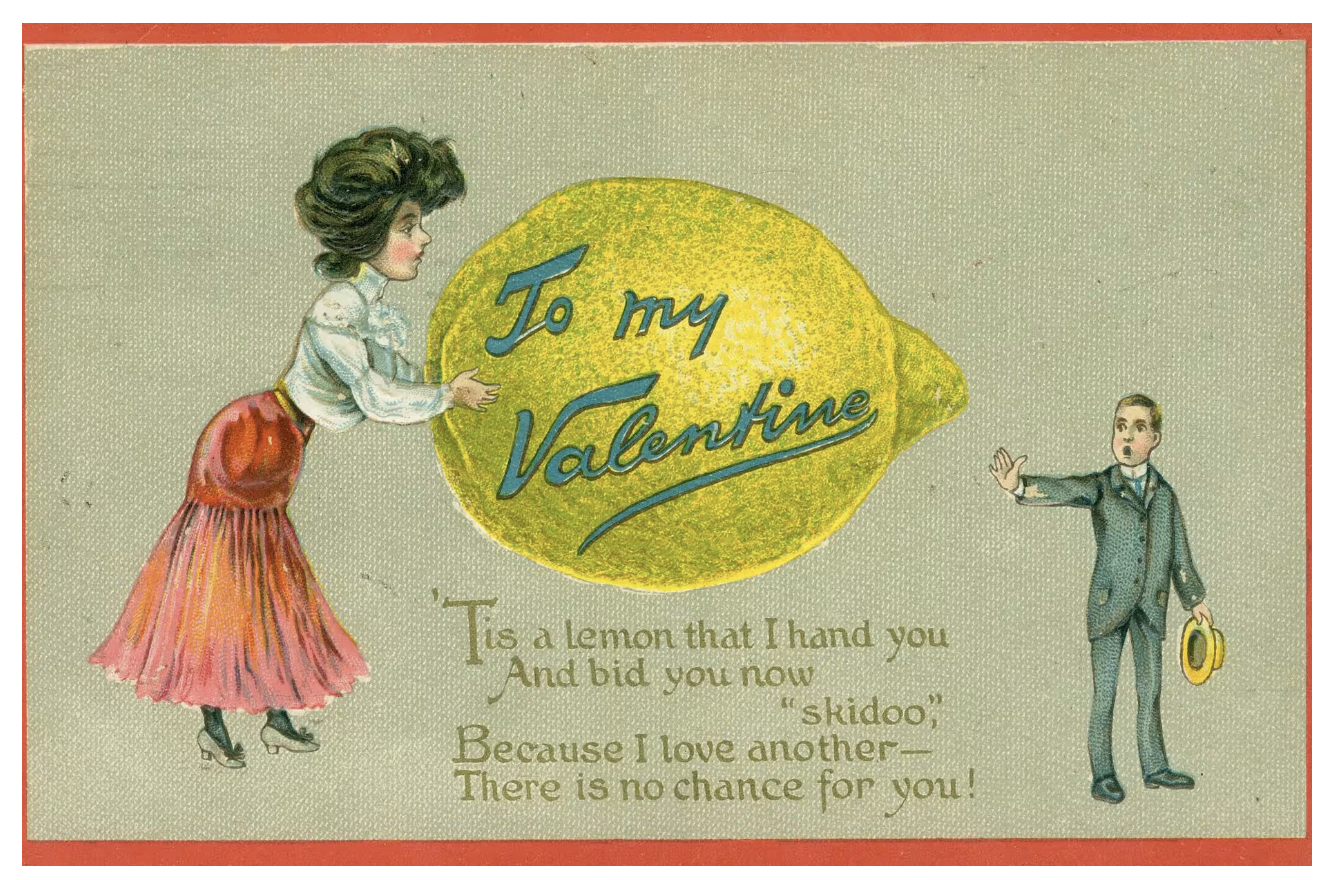
Missouri Historical Society
Not to say all relationships should rely on Vinegar Valentines to suss out their differences, but as ample amounts of anti-romance continues, maybe Vinegar Valentines should revive these sour lemons, ahem, acetic acid-like advances.