
Slight Sour About It: Surette Should Be Quebec’s (Vinegary) Condiment of Choice
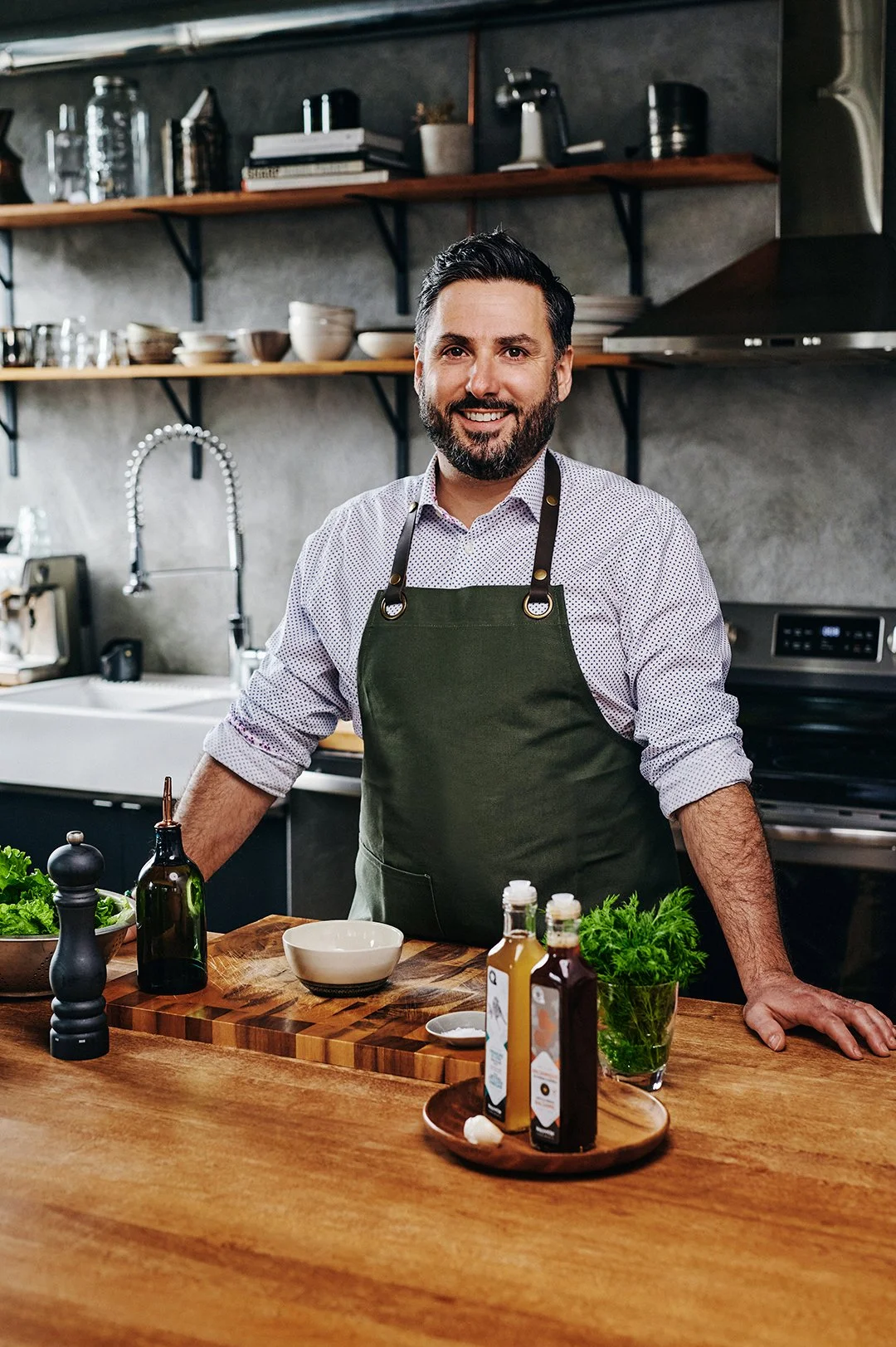
Quebec is celebrated for its constant flow of maple sap, a sticky sweet treat atop pancakes or the beloved tire d'érable (maple taffy) to all you French-speaking Canadians. That said, La Belle Province isn't without its fair share of sour—from locally foraged gooseberries to bright orange sea buckthorn. There’s even Chow-Chow, a cabane à sucre (sugar shack) staple made from green tomatoes, onions, vinegar, sugar and pickling spices, served alongside a tourtière, or classic Quebecois meat pie. There’s a reason Cyril Gonzales thinks Surette, translated to “slightly sour”, the beginnings of a condiment company he started in 2017, ostensibly an apple balsam, is a bucolic way of enjoying acid that should be as revered as the aforementioned syrup.
How does slightly sour play into Montreal’s food scene?
We have a big influence from Asia, mainly condiments, but it’s not about the cuisine. It was a product that, when we looked at the market, 90% was Italian vinegar and balsamics. Grapes. We have fruit to make the vinegar, but maybe we can do something different, with apples, apple cider vinegar …
Gonzales goes on to reference Marché Jean-Talon, Montreal’s open-air farmers market, where I’ve gathered many bottles of Pierre Gingras’ apple cider vinegars in the past, but not since the Levasseur family, owners of Au cœur de la pomme in Frelighsburg, bought the vinegar company in 2017. Although Gonzales enjoys their 2-year-aged ACV, he explains that Surette is something completely different.
What makes Surette special?
The key ingredient is apple must. We select late-harvest crab apples, Empire, Macintosh, Spartans … Make the juice, press it, cook it very slowly, and all that caramelization is like an apple tart. More acidic apples, more acidity at the end. Apple syrups in the US are reduced so much that they’re only sugar. Chefs want to use a different profile. One with acidity at the end.
Where do you source your apples?
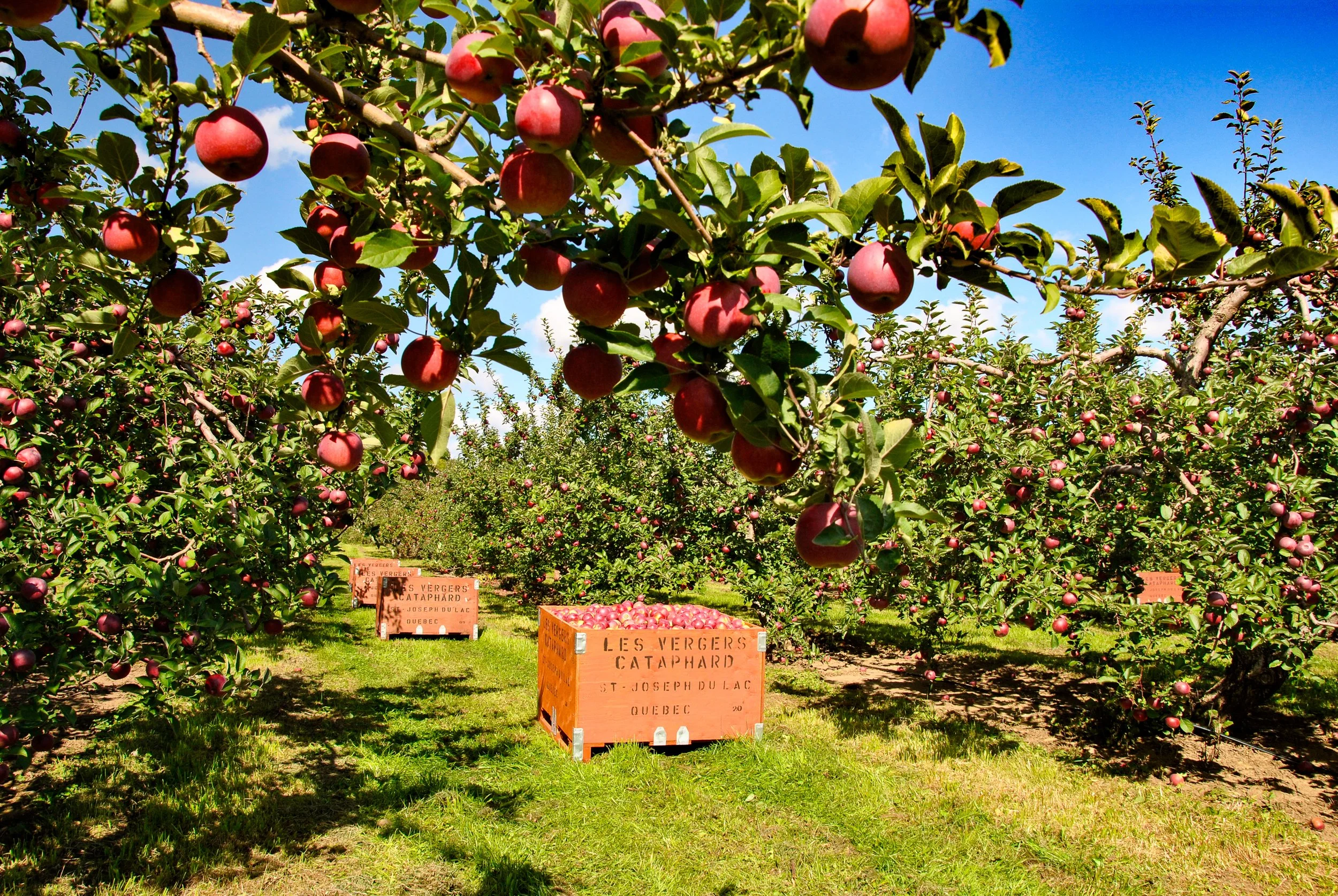
We work with a 4th generation grower called Les Vergers Cataphard & Fils. It took a year to convince them to work with us. We were told that nobody would buy a balsamic with apples until we started working with Pierre La Haye, our R&D mentor. He’s like our “Sunflower Professor” from Tintin. When we came to the facility in Saint Joseph du Lac, one of two apple-growing regions: the North is Laurentians, the other is South Rougemont, where Pierre Gingras gets theirs.
Surette is evolving. For their 10th anniversary, they’re changing their name to Maison Surette and introducing a new project: butter, with an inherent acidic flavor built in. Whereas I remember Gonzales’ prior company, Société-Orignal, I will never question his sourcing, which has always been immaculate, as well as … their butter’s secretly been on the table at Restaurant Daniel for 15 years!
What have been the challenges in the ever-changing business landscape over the years?
Tariffs! Canada had to wake up. We have a lot of great products in Canada, but depending on the license, you can’t sell to Ontario. Provincial permit versus federal. So what do you do when you can’t make enough premium product sales in Quebec? New York City is only a 6-hour drive.
But it is a seasonal condiment like maple syrup is considered in Quebec?
Chefs cook by season. When apples are in season, we sell the most Surette. But for us, when it’s growing season, we can not produce! Everyone’s asking for the product, but everyone is harvesting! We produce in May/June until November, when it’s the new batch. We plan, and don't want to overproduce. We want fresh batches. When you have balsamic from Italy, they don’t think there’s a season for balsamic!
NOTE: Maple tapping season in Montreal is usually March, though we all know it’s poured on pancakes year-round!
But this is an aged product, right?
It depends. There’s no age on the apple. The late harvest apple and maple is 2 years. The turnover time (for Surette, straight up) is one month, but it’s best when it’s freshest. Becomes more plum with age. Darker, stronger; 3- 6 months is the best time to use it, and obviously people can buy it again! We kept a 5-year-old barrel that we’ll launch this year. Oak from a US rye importer — it’s for more structure.
Oh! Do you work with other businesses otherwise?
Next year we are collaborating with La Villa vinaigres & jardins. We need to work together — our competition is not a small business; it's a big industry! It’s an ice cider vinegar, 3 years; maybe we can do something with our apple must. It’s a small collaboration to start and see how it goes.
So, what are the best use cases for your Surette?
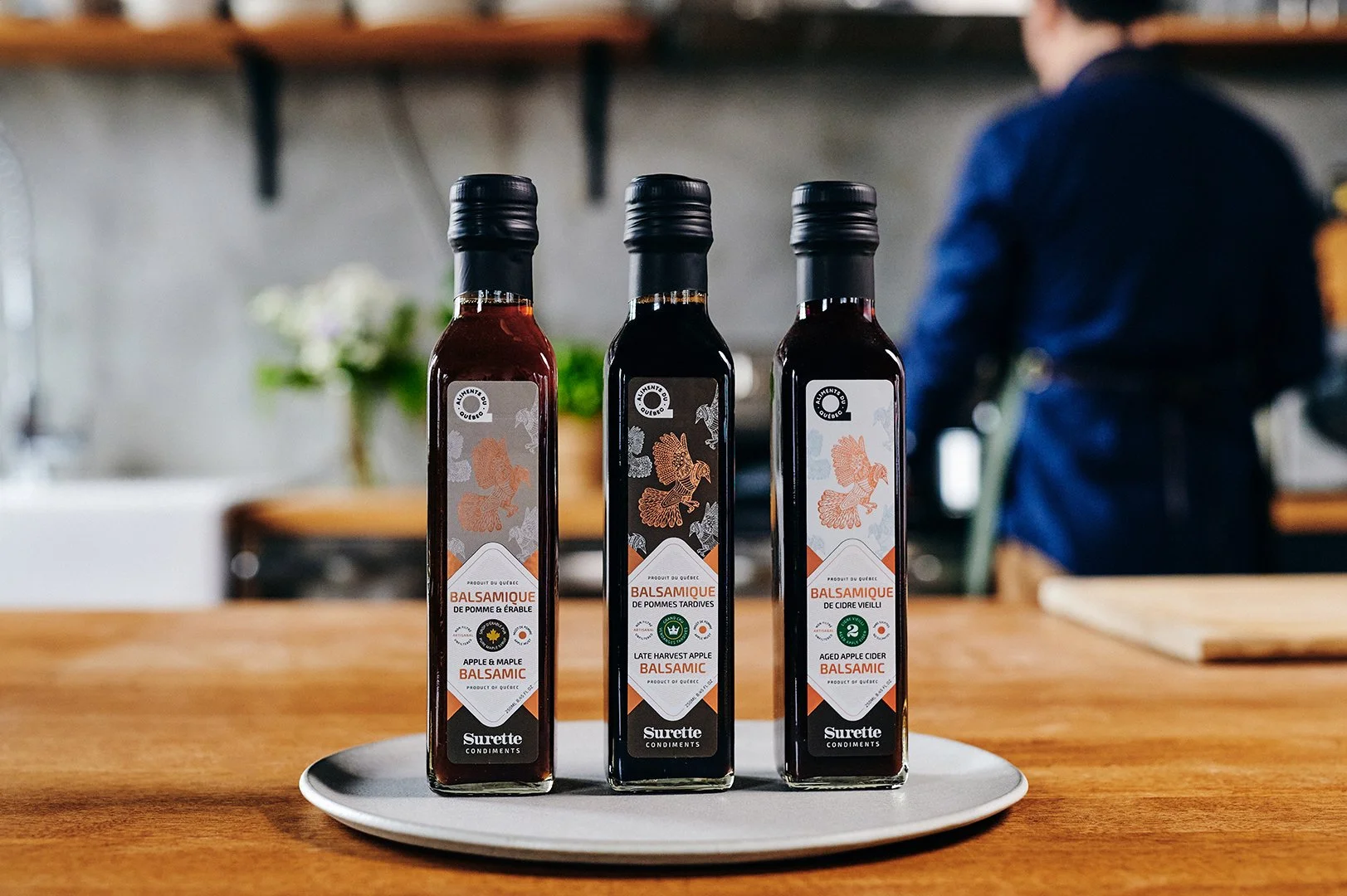
Basic tomato mozzarella. Great on salad. Glaze my chicken, salmon, fish. Making a vinaigrette. We found that The Fat Duck in the UK was making duck tartare and glazing the apples with apple Surette!
What about an apple tatin?!
With plain vanilla ice cream, it’s amazing on top! People use it on yogurt. More of a finishing product in recipes. It’s expensive, but when it’s your own product, you don’t see
the price, ha!
I know you’re opening up a new category: glaze. Tell me about that.
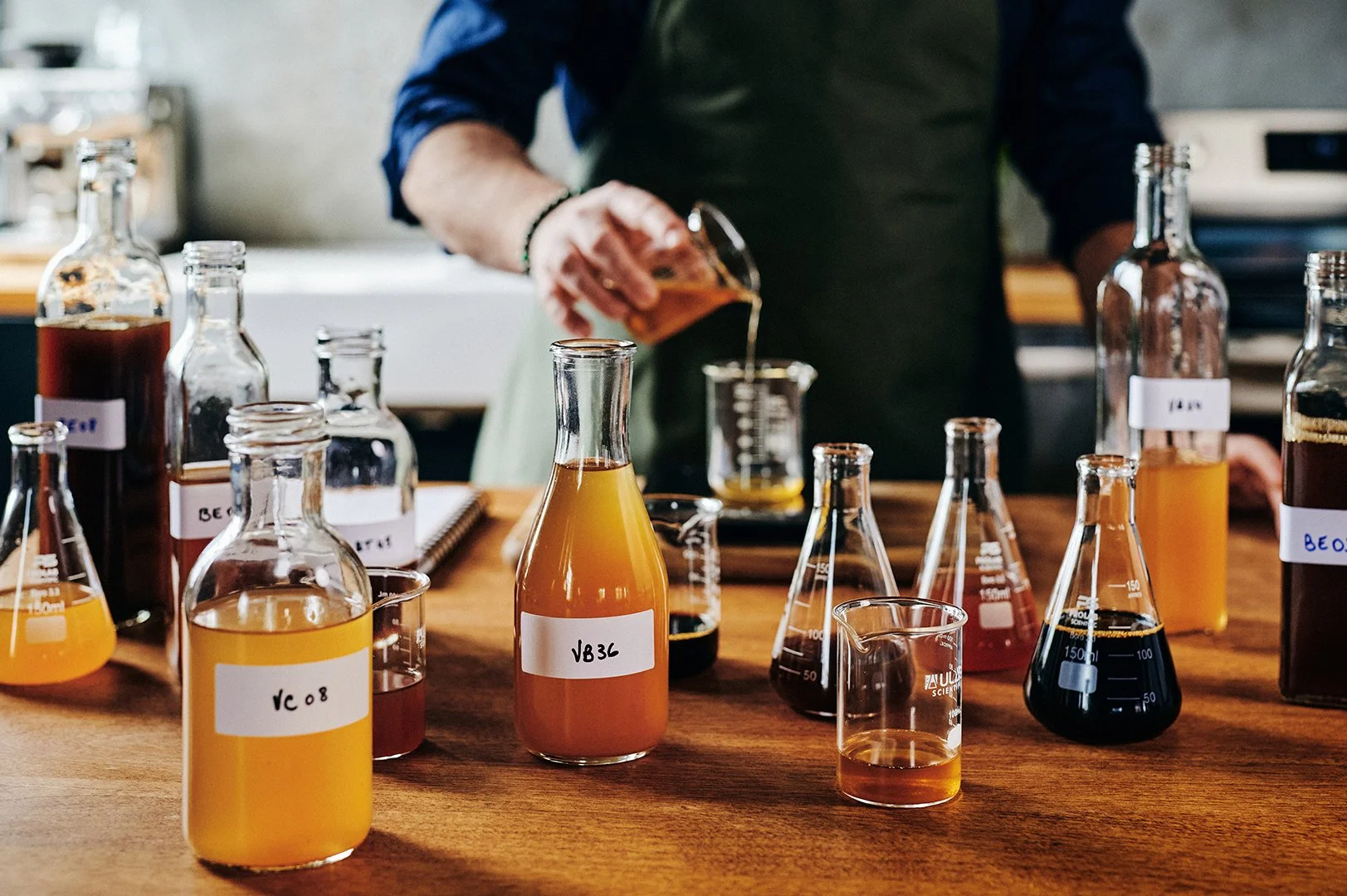
We’ve been doing glaze for 2 years now; we sell so much it’s crazy! Smaller size, more day-to-day use. When you receive a nice bottle in a box, it’s like a present. People use it in small dishes, keeping it like gold. We don’t have a lot of turnover with Surette. As a producer, you want to grow. This is what glaze is for.
So how much do you make a year?
Apple must, 4 times a year, every few months. Around 10,000 liters! We use it to blend and make more stuff around it. The ratio depends; in some (blends) it’s 20%, 60% with the glaze. It changes the volume too. Some we bottle in bulk. Our friends at Forum (Spanish vinegar maker) are making 100,000 bottles a year! This is my goal. Right now we’re at 25,000.
Then what’s next? Other fruit?
Exactly. We tried cranberry vinegar and blended it with apples; it was too acidic and too tart. We don’t want to extend our products into more vinegars or balsamic; our distributor asked us to develop a new glaze. We want to develop a line of chutneys. Caramelized onion chutney with apple balsam. Cranberry and apple balsam, perhaps. Apple and maple balsamic jelly. Competition is strong in cheese and dairy in every boutique in Canada. Vinegar is fine, but we can extend it into condiments to put on a cheese plate. This is how we came up with butter. Straight vinegar is a small space. This way people will see the brand a bit more.
But what about maple syrup? Will they always be the monopoly?
70% of the world’s production is from Quebec. (If you travel to) Italy, you bring balsamic vinegar, cheese. Come to Quebec; it’s maple everywhere- how can you fight against it?! How can we join forces? Be that present that people want to bring back.