
Greeking Out Over Greek Vinegar
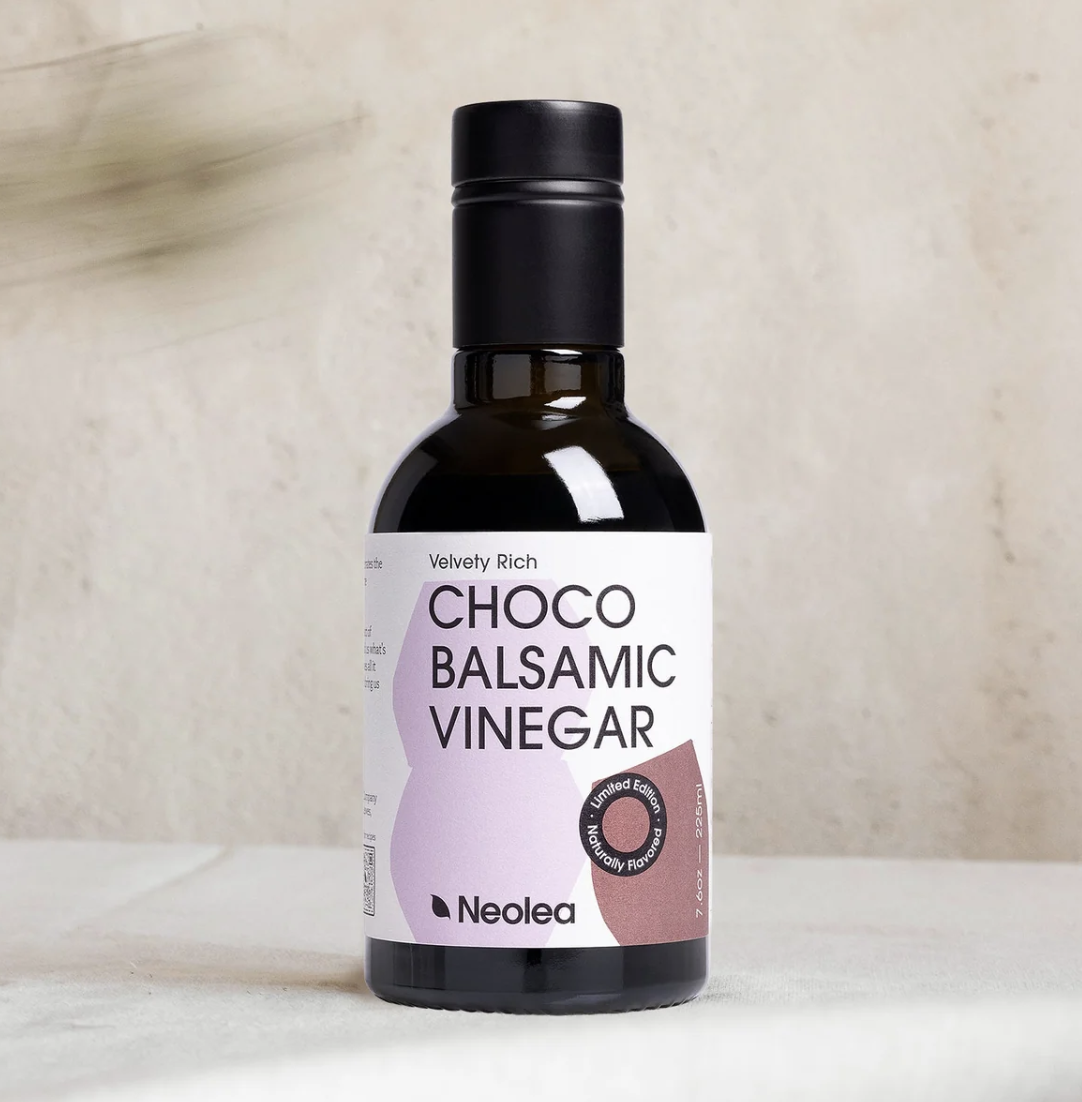
Neolea choco balsamic
My 7-year-old loves listening to Kenny Curtis’ Greeking Out podcast, so much so that he went as Heracles — not Hercules (the Roman spelling) — for Halloween this year. This got me thinking: does an ancient civilization whose origins are in oxos (ὄξος, vinegar), a modern-day oxymel, or drinking vinegar, usually a mixture of water, vinegar, and honey (or honey vinegar!), currently use vinegar in their culture and cuisine?
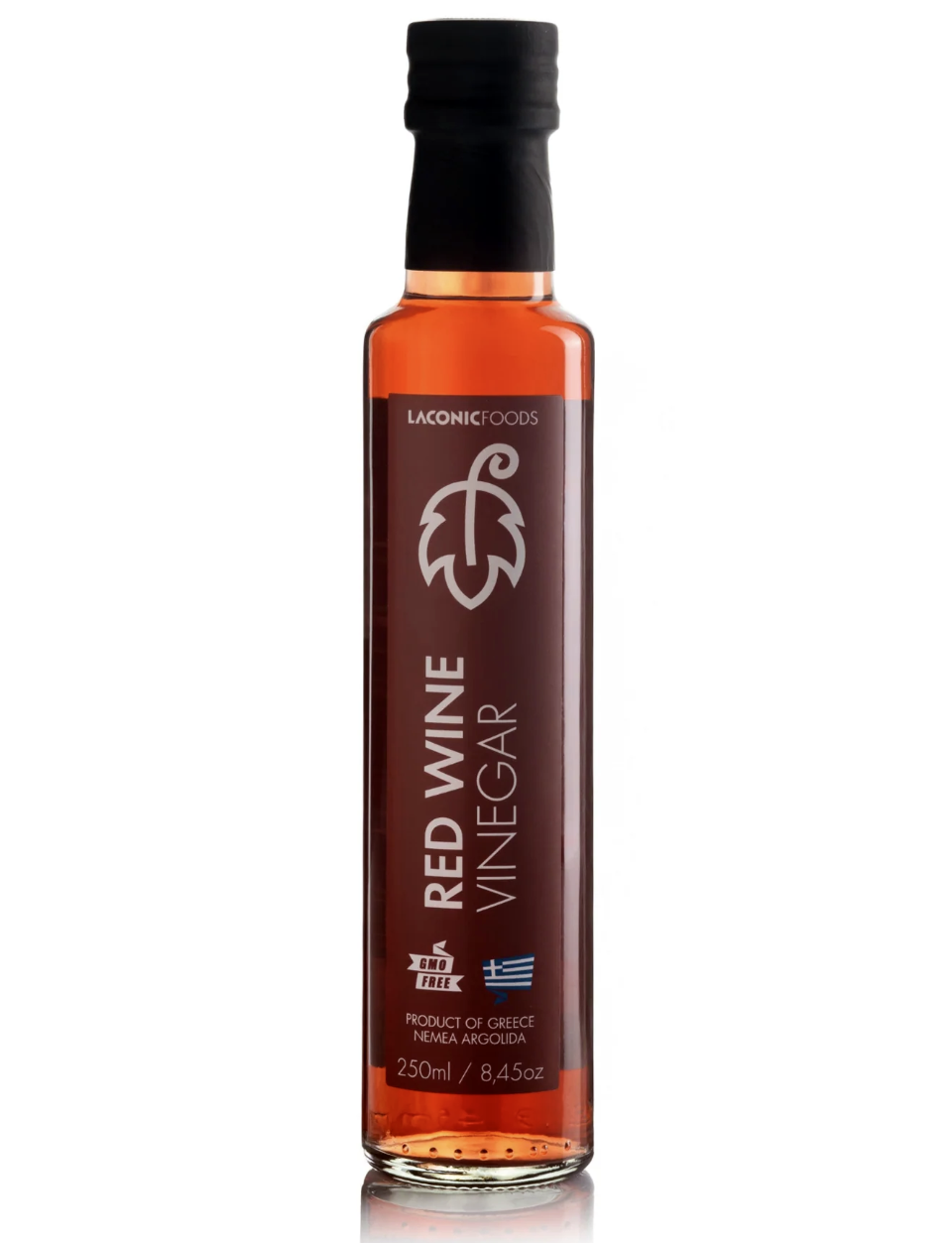
Laconic Foods red wine vinegar
The drink itself was initially meant for soldiers as hydrating refreshment in the field, pseudo-sterilizing any questionable water (it was a mild disinfectant) and adding some flavor therewith. It later was developed into what Roman philosophers refer to as posca, which used wine vinegar more so than honey, was drunk instead of wine, and was meant for a lower class of citizens due to the cost.
Today’s Greek cuisine is “founded on the triad of wheat, olive oil, and wine,” but herbs, particularly lemons, were incorporated into the menu in the 2nd century from coastal regions, first for medicinal purposes, then into the diet. Seafood, such as whole fish and squid, gets a nice squeeze of lemon atop them after being grilled. Horiatiki salad (aka, “Greek Salad”) is dressed with lemon. Even spreads like tzatziki and taramosalata use lemon juice as their acidifying agent. My favorite is avgolemono, a soup, or emulsification, bound by lemons and eggs.
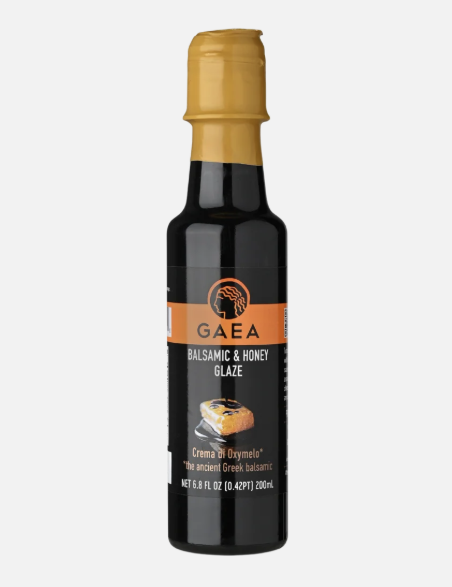
Gaea fig balsamic
That’s to say, vinegar was a lesser part of the process. The 7th-century Spartans were marked by their frugality, as seen in melas zomos (black soup), made by boiling the pigs' legs, pigs’ blood, olive oil, bay leaves, and onions in heavily salted water, with just enough vinegar to prevent the blood from coagulating during the cooking process. Although grilled octopus sometimes gets marinated in vinegar, skordalia, a garlicky mashed potato dip, defers to acetic acid over citric. With so many lush citrus groves across the island nations — I mean, there’s even a place called Lemondasos, aka The Lemon Forest in Galatas on the Peloponnese coast — vinegar feels forgotten … until now!

Yiayai & Friends white balsamic
A handful of brands have begun a Greek vinegar revival, led by Yiayia & Friends and Kosterina while Primis Imports is planning to expand into vinegars soon. Yiayia, which means grandmother in Greek, collaborates with one of Greece’s most renowned wineries, home to some of the country’s largest privately owned vineyards. The grapes are harvested by hand, exclusively from the winery’s own vineyards, ensuring full quality control at every stage, from vineyard to bottle. While they offer a classic Modenese-style organic Greek balsamic, it's their Yellow Fruit Vinegar (which is sparse and may be out of stock, so if you find some, buy some, and save one for me!) that is outstanding — ostensibly a white balsamic blended with four citrus juices: lemon, mandarin orange, grapefruit, and orange. It’s strikingly good on salads, as expected, but also spritzed on top of fish as you would a wedge of lemon.
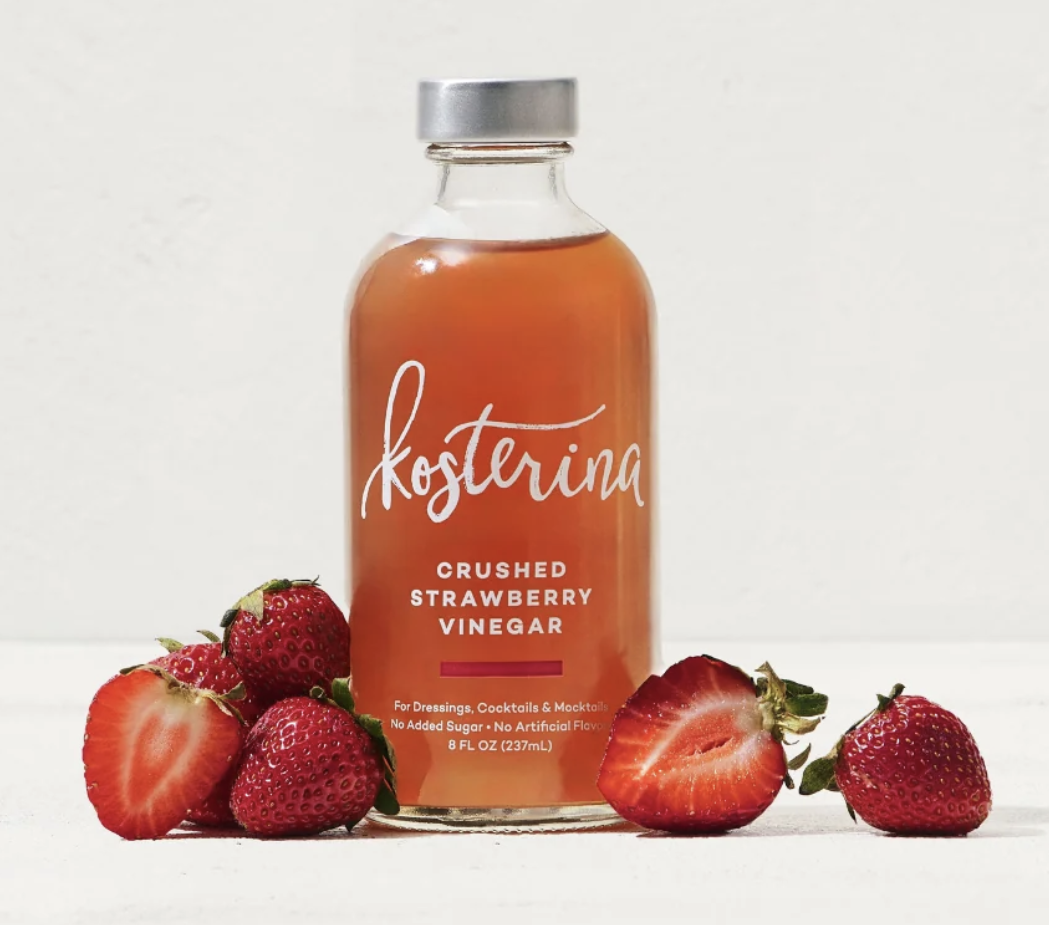
Kosterina strawberry
While Kosterina’s fig balsamic is fantastic, it’s their crushed fruit line, especially a tangerine and strawberry (which you can get by the single-serving shot!), that is not to be missed. Gaea makes oxymel balsamics with Greek honeys, inspired by a traditional Minoan recipe. Grab either their thyme or Cretan variety. Or try NeoLea’s choco balsamic, which pairs well with fresh strawberries. If you’re looking for something more standard, Laconic Foods’ Kalamata white wine vinegar or Agiorgitiko red should be pantry staples.
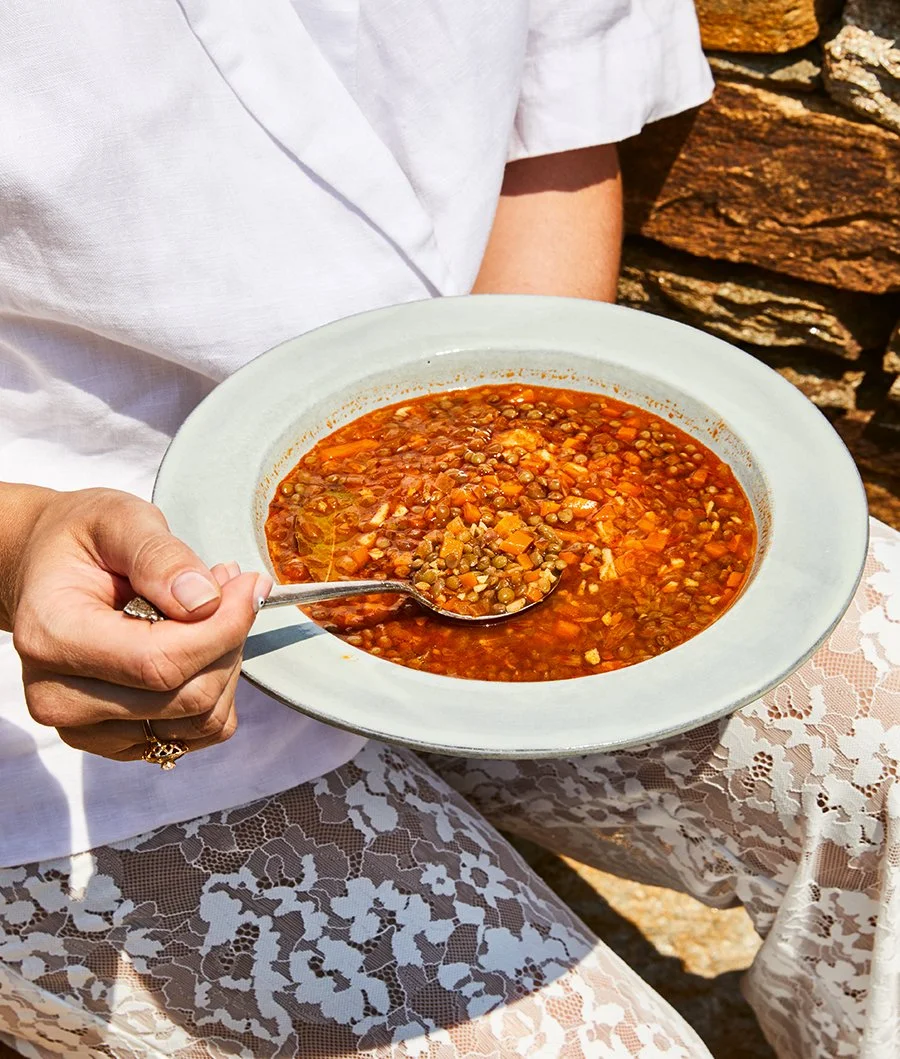
Maria Koutsogiannis Greek Out fakes
Most recently, Greek food blogger Maria Koutsogiannis released her cookbook Greek Out. I flipped through the pages and found a lentil soup called fakes; not surprisingly, it was served with vinegar.