
Gather Around Kay Chun’s Table
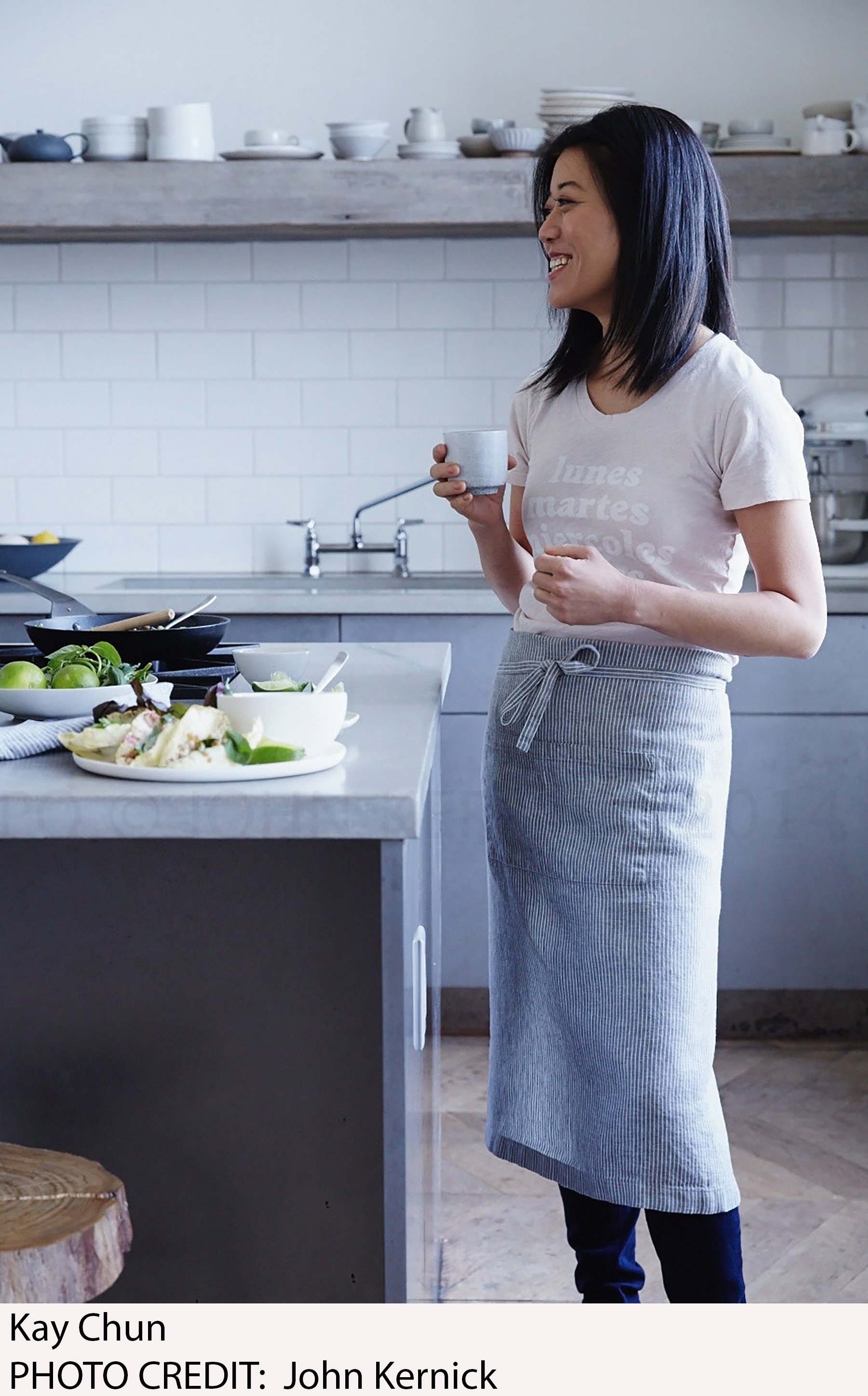
Kay Chun is a native New Yorker whose Korean culinary heritage has been central to her career as chef/owner of Share in the East Village and as a regular contributor to the New York Times Cooking site. But as globally minded a cook as she is, her vinegar consumption is predominantly white distilled, at least in her new book, Gather Around My Table. We talked to Chun about her vinegar-y recipes, from subtle additions that balance sweet and spicy to sharpening soups and sauces.
Why is white distilled vinegar your go-to?!
Honestly, it’s my favorite vinegar. I know it’s low-brow, super basic; I feel like it has the cleanest flavor, gives you the acid that you want without anything else, and allows everything else to come through. My mom used a lot of rice vinegar, which compliments Korean food really well, but when I cook for myself, style of food, it’s always white distilled. It’s the most accessible.
But you do use other vinegars sometimes, right?
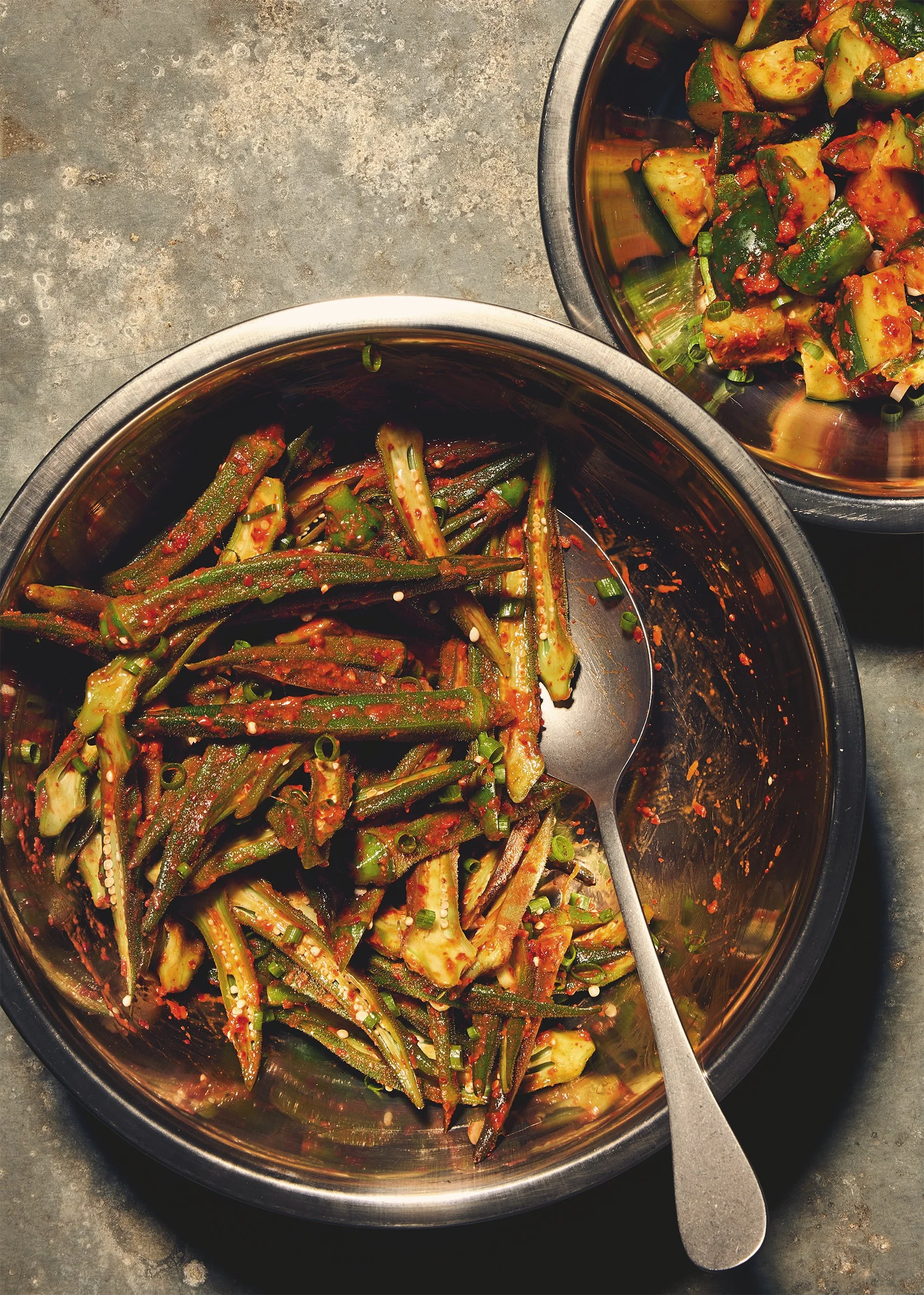
Quick Okra Kimchi
I think I use rice vinegar in my okra kimchi — I always use the unseasoned (rice vinegar). It has a subtle sweetness, and I think it really balances all the spice (gochugaru) in the kimchi. You don’t have to use just one (acid); I think layering them is really effective. Kimchi has that light vinegary flavor (from lacto-fermentation), but it needs that pop from bright vinegar; they work well together. If vinegar is giving me the acid flavor, not the pop, I’ll add fresh lemon or lime juice. Layering brings more to the table and rounds everything out.
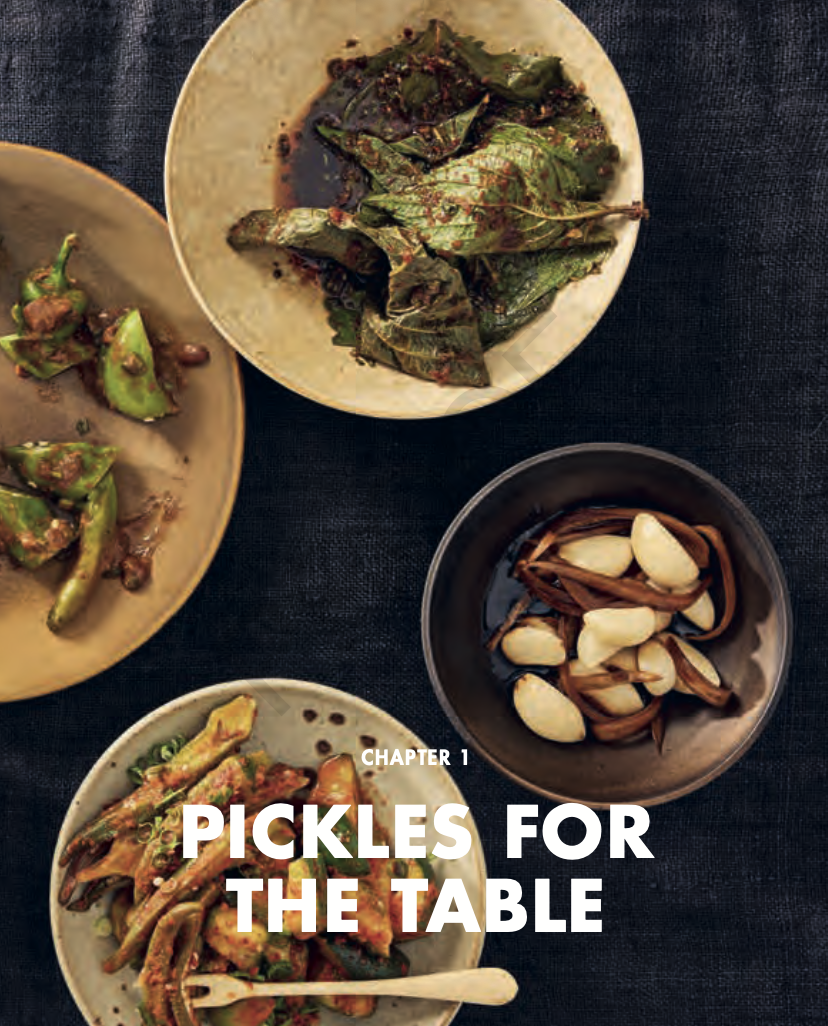
Of all your pickles you have in your book (e.g., Caraway-and-Soy Pickled Garlic, Quick Okra Kimchi, White Kimchi Giardiniera), I’m most intrigued by the Star Anise Pickled Peanuts — tell me more about them.
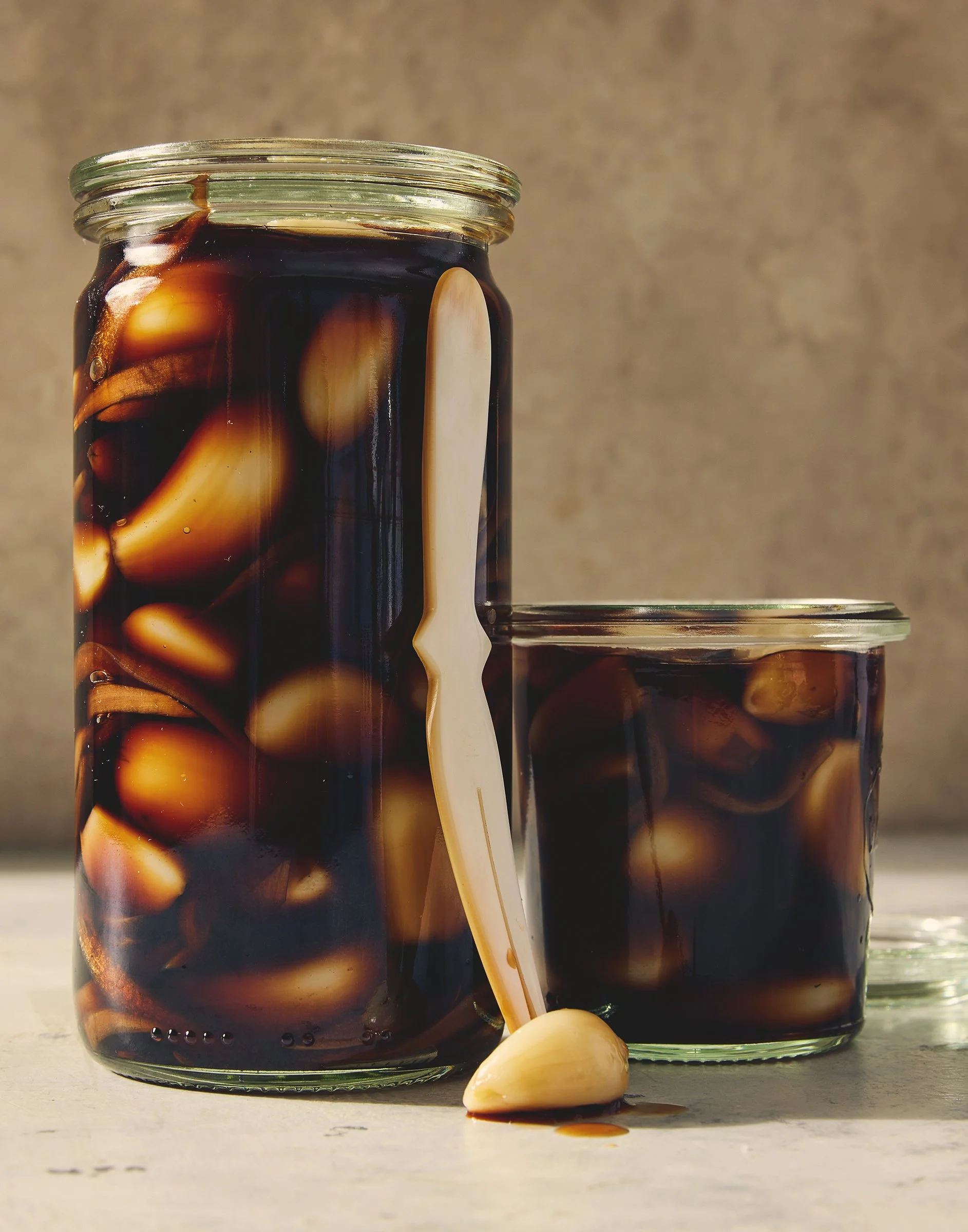
Caraway and Soy Pickled Garlic
Honestly, I kind of just made it up; it was more of a textural inspiration from the Southern peanuts I was searching for. I’ve had the Chinese version of those peanuts; I wanted to infuse them with different spices. I also love using soy sauce and infusing them with star anise, cinnamon …
How does soy sauce interact with vinegar?
The soy sauce and distilled white vinegar are such a great combo — vinegar brightens the soy sauce. In my Tangy Dipping Sauce, I’ve tried rice vinegar and apple cider vinegar, but they (both) infused too much of their own flavor and altered the soy. Super clean acid is what I wanted. It’s more of an all-purpose dipping sauce which can go with a lot of different things: dumplings, drizzle it over rice, stir-fries, vegetables …
Don’t you put vinegar in your Double Allium Pork Dumplings?
It’s probably one of the only times I would put vinegar in a dumpling mix. I steered away from soy or vinegar in the dumpling mix, but it (the vinegar) seasoned it (the meat) as it sat there. Pork could be a little heavy; vinegar makes the whole thing lighter and brighter.
I love how vinegar brings the heat in your Habanero Hot Soy Sauce. How much is in there?
You do need the acid. It doesn’t need a lot. It needs a lift. Again, using the white vinegar, but adding sugar here: turbinado (1 ½ teaspoons to ¼ cup low-sodium soy sauce) — it’s a flavor thing. I didn’t want it to go in any direction other than bright. Turbinado adds sweetness; it’s not cloying, and it’s only a tablespoon (of white distilled vinegar) there to anchor it.
This sounds similar to how you balance your Grated Tomato-Shallot Vinaigrette
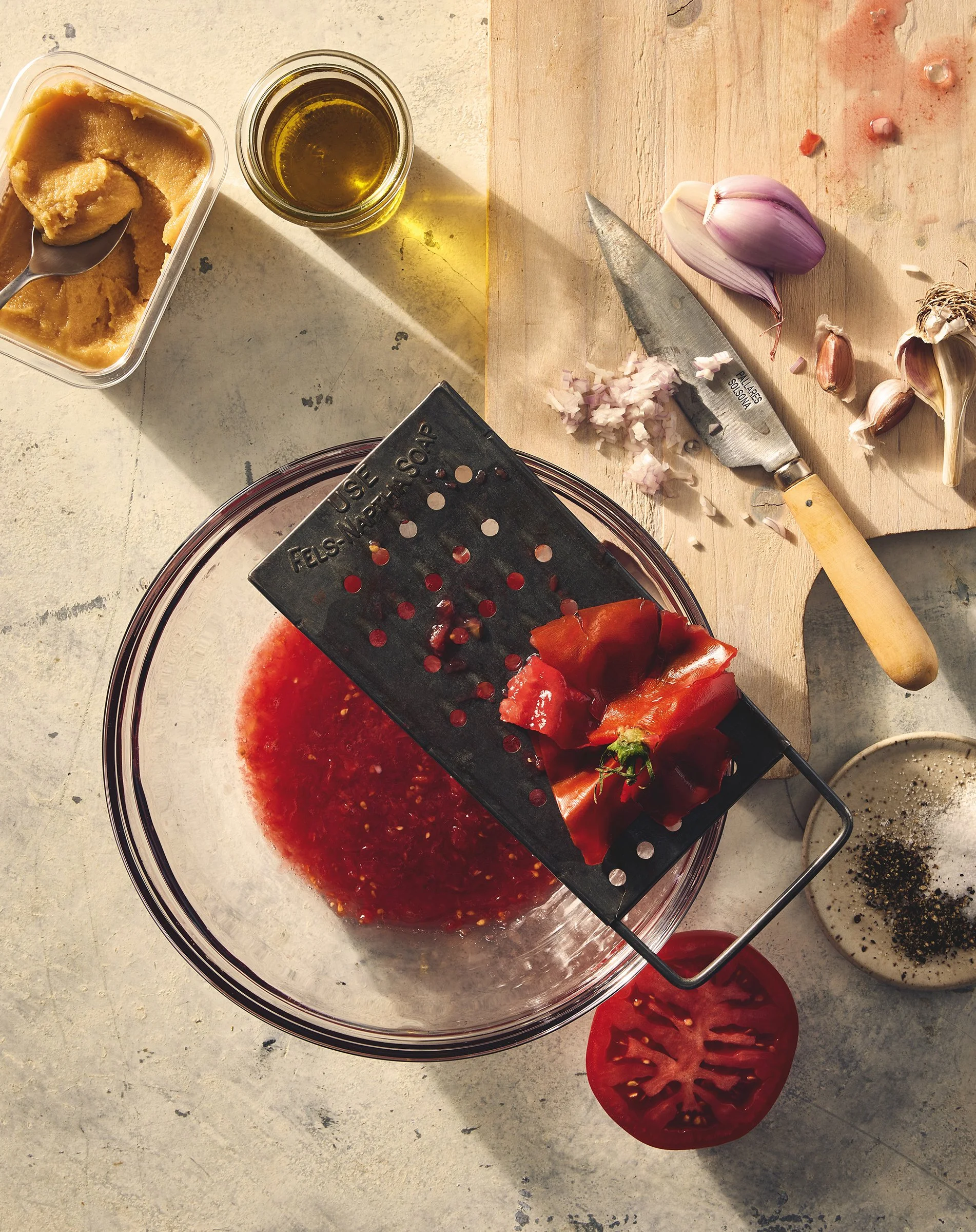
Grated Tomato-Shallot Vinaigrette
The vinegar works really well with miso; it’s bringing its own sweetness, and I didn't want to add any more. Tomato, bringing its own acid, I didn’t want to mask that; I wanted to augment it.
Augment is such a great word for how acetic acid adds to a dish without overpowering it. What other recipes illustrate that?
Chilly Chewy Noodles in Tangy Tomato Broth is all about the broth — super tart and vinegary, it needed that extra push. Tomatoes aren’t classic or traditional (in this dish). The original way to make this is with kimchi brine and beef broth; tomato juice gives you that tang, and then again that white vinegar augments that tomato without overtaking.
But a dish like Black-Eyed Peas with Doenjang and Hot Chilies needs a bigger boost, right?
Doenjang and peas have rich, earthy flavors, very deep, and need that acid to brighten and let them shine.
Or how your Swordfish with Seaweed Chimichurri uses vinegar as part of the sauce to pair with a dish
I’m very obsessed with seaweed: it’s one of my favorite things to eat. It seemed like a natural pairing for the dish. I try to use it a lot, and love the texture. Swordfish is such a meaty dish; something chewy in the sauce is a nice complement, and that briny marine flavor brings out all that fishiness in a positive way. I think white distilled vinegar here is an underdog, a superstar.