
Sipping Sikcho Before Dinner: Korean Vinegar Drinks
I didn’t expect the exhilarating effervescence of a Korean vinegar drink to be my foray into Joo Ok, a 2-Michelin starred restaurant founded in South Korea by Chef Chang-ho Shin that revolves around the art of fermentation. In the fall of 2024 their New York City outpost opened on the 16th floor in Koreatown (32nd Street between 5th and Broadway) — with crocks of jang (homemade soy bean and chili pastes), considered Korea’s mothers sauces, on display upon entrance.
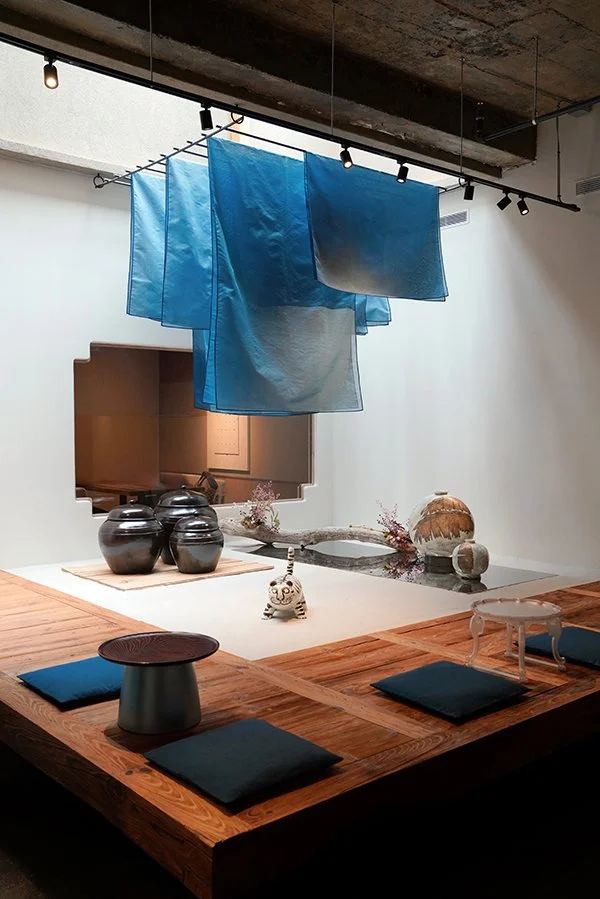
Joo Ok daechungmaru courttesy of Yealim Kong
Last spring I saved an Instagram post about these fermentations living within Joo Ok’s daechungmaru, an open hall at the heart of traditional Korean homes, which, in this case, leads diners into the dining room. Front and center, large glass containers of vinegar age in plain sight. Now, a year later, these ferments are making their premier at the table, in the form of a spritely libation. Currently there’s a Gala apple vinegar, and another of Cabernet Sauvignon grape, which chef Keunwoo (Ben) Park mixes with elderflower syrup and a splash of seltzer, and serves alongside a spongy warm slice of gim makguli bread (seaweed, rice wine), stacked upon with square of sweet-glazed eel, ganjang jelly. The vinegar drink is used to compliment this luxurious and layered introductory bite — but also, echoes their no-waste mantra.
I’ve previously written about vinegar’s use in Korean cuisine (see: Vinegar Makes Korean BBQ Better: What To Cook In Koreaworld), but drinking vinegars in Korea were a blindspot, a refreshing new(er) ingredient in contemporary Korean culture, be it as a light aperitif to begin a meal, as palate cleanser between courses or curative on it’s own.
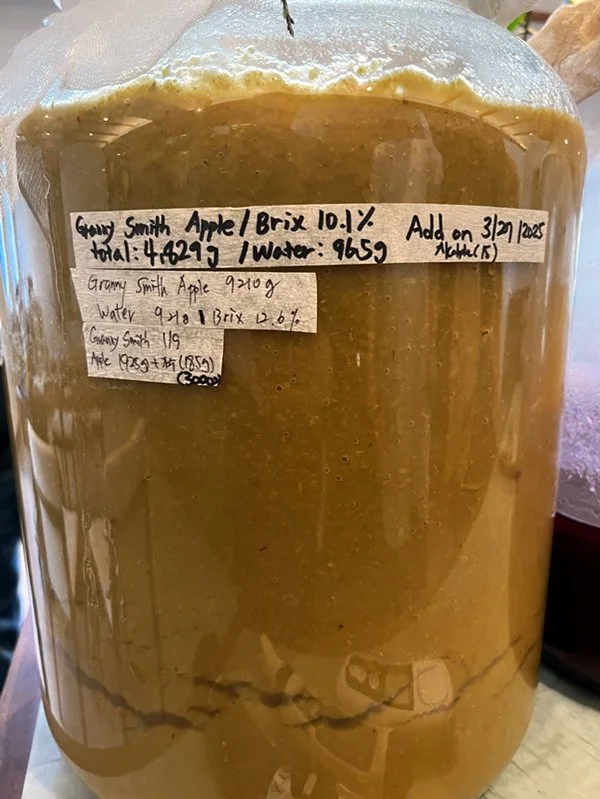
Joo Ok apple vinegar demijohn
Sikcho (식초, shik-cho), the Korean word for vinegar, refers to an array of sour cooking liquids made of fermented grains, most commonly rice (ssal-sikcho), or fruit like apples (sagwa-sikcho) and persimmon (gam-sikcho). At Joo Ok, vinegar is a vital part of the lifecycle of produce that makes its way through the kitchen. First Hand Farm, in the town of Bloomingburg in New York’s Hudson Valley, has become an inherent part of Hand Hospitality’s supply chain, the restaurant group behind Joo Ok and many other Korean restaurants in New York City; chefs put it on themselves to find flavorful and sustainable ways to use the whole fruit. “Peels are used for broth, and the best part of veg for service,” says Park, who uses the scraps for juice to make seasonal cheongs (flavored syrups), a Korean pantry staple. Whatever’s left is put into large glass demijohns that are topped with airlocks, in order to slowly regulate fermentation, and labeled mandarine, plum, ginger, depending, creating a kaleidoscope of colors from bright sunny orange to deep purple. Once the vinegars reach the desired ABV of about 14% they should eventually produce a pH of 3 or less (they’re tested monthly, if not weekly), they’ll be used in drinks and dishes. Even more esoteric (to the American palate) and intriguing ingredients such as Omija, aka five-flavor berry, and Deodeok, a perennial climbing vine that tastes like pine, and is more so used in the vein that food is medicine. But unlike a shot of straight ACV in the morning, or harsh fire cider for winter colds, “our Korean medicines are delicious,” states Park.
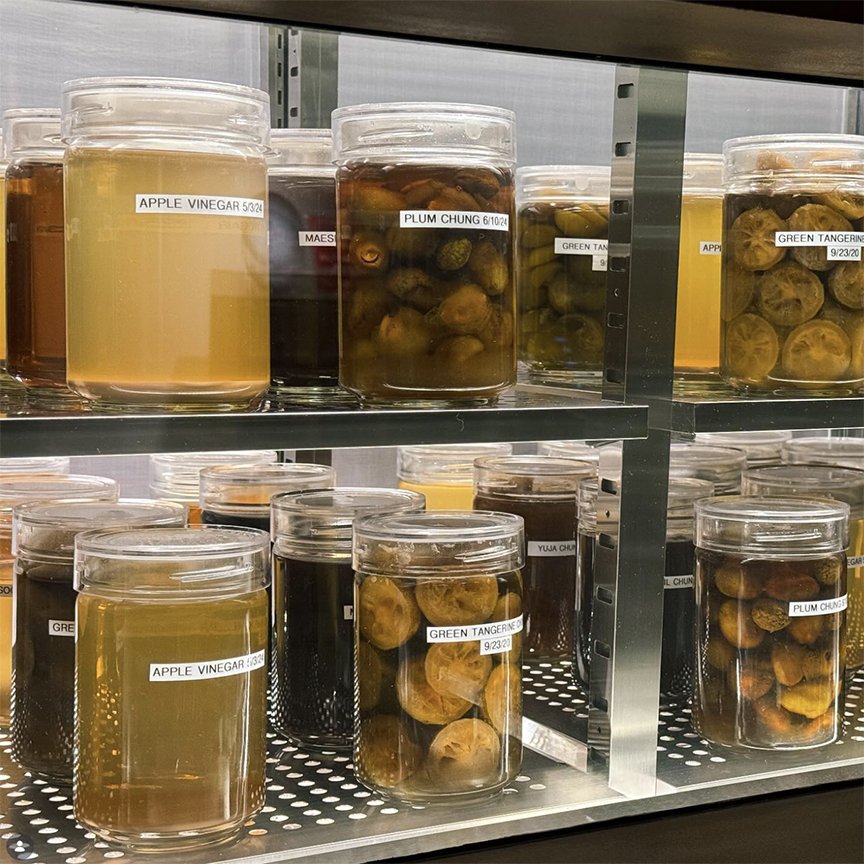
Joo Ok jars
The vinegars are softer than most, with an acidity of 4-5% acidity range, but they’re incredibly flavorful. “Sweet, sharp, but not too strong — a middle balance,” says Park.
With most vinegars taking at least a few months to fully ferment, and New York real estate being what it is, Joo Ok is planning to move some of these fermentations up to the farm.
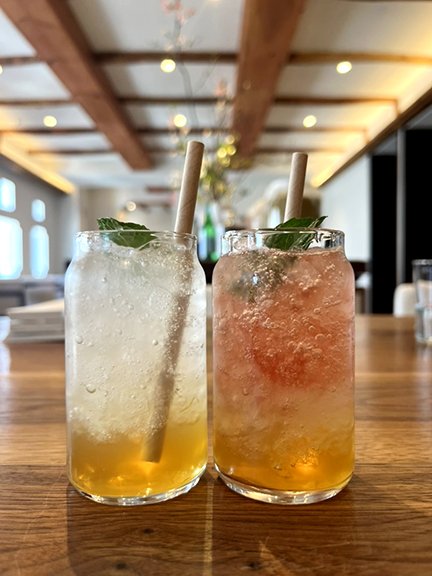
Joo Ok vinegar drinks
One vinegar that I found especially interesting for its simplicity and complexity was a rich, almost milky makegeoli vinegar (made from makegeoli rice wine) made via a double fermentation. First, an alcoholic base of grain ferments for about 2-3 weeks before a “mother” is added in the form of nuruk, a traditional Korean wheat paste that naturally speeds up enzymatic reactions in many ferments. As the weather heats up, Chef Park is already planning for new batches of peach, blueberries and upcoming seasonal fruits, thinking about summer produce, and next year’s vinegar drinks. “There are not too many Korean vinegar options [on the market],” notes Park, “so we make our own.”