
A New Type of Distilled Vinegar: Leopold Bros Brandy and Bourbon Vinegar
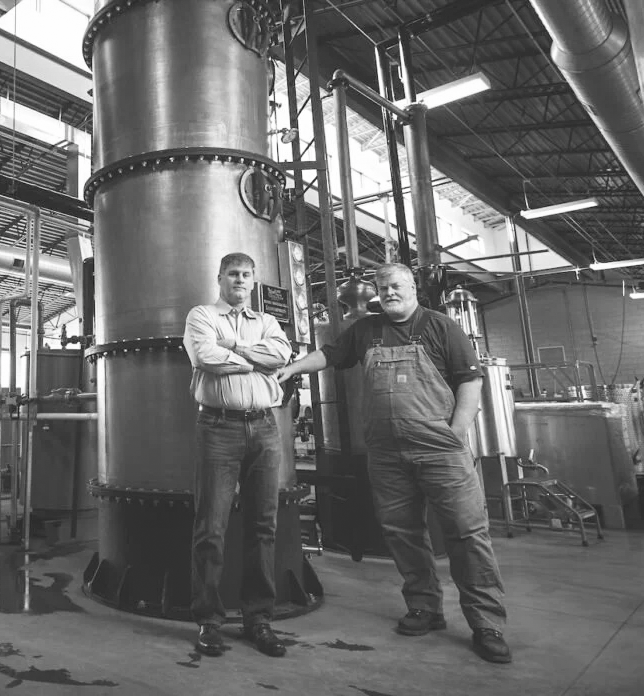
Todd & Scott
At the Leopold Bros distillery in Denver, Colorado, brothers Todd and Scott Leopold go to great lengths to create high quality spirits using slow, inefficient, Old-World techniques. And then they dump some of those carefully-made spirits into a big vat filled with bacteria.
This is the process of making their line of vinegars, which are nonalcoholic (and so can be purchased online nationwide) but made from a 7 year old bourbon, a peach brandy, and a red wine. The company launched the vinegars earlier this year.
The Three Chamber Still
Leopold Bros have been making spirits for about 20 years and moved into their current location in 2014. There they embrace several different vintage technologies, including a dunder pit (a storage tank of acidic liquid historically used in Jamaican rum), a floor malting facility (where grains are wetted and hand-raked and then dried, to prepare malted barley traditionally for Scotch whisky), a dunnage-style barrel-aging facility (dirt floors, high humidity, and short stacks of barrels), and a custom-built three chamber still.
That still is an 1800s-era still shaped like a stubby column or a tall oil drum but is functionally more like three pot stills stacked atop each other- and it is one of (if not the only) working one in the entire world. They had the still recreated from old manuscripts, specifically to recreate a lost pre-Prohibition style of American rye whiskey that was (and is again) super floral.
The still project was many years in the making and produced rye whiskies being released at increasing ages as time goes on. (They’re up to nine-year-old aged rye so far.) They’re also using the still to make eau de vie (spirits, usually unaged, made from any fruit) from California pears and Colorado peaches, and probably other fruit soon.
But it turns out that this same style of vintage still used to make their vintage-style rye whiskey was once used to make distilled vinegar, so they decided to give that a try as well.
Distilled Vinegar
Red wine vinegar, apple cider vinegar, malt vinegar, and sherry vinegar are all produced from fermented liquids. Distilled vinegars are not vinegars that have been distilled, but vinegars made from distilled (rather than only fermented) alcohol.
Typically, the bulk distilled white vinegar we see on store shelves is distilled from inexpensive beer made from corn or malted barley, but at Leopold’s they make it from their own carefully distilled products.
Vinegar from the Three Chamber Still
In a video on the Leopold Bros website, Todd Leopold discusses how they started making vinegar. He learned from drink writer Noah Rothbaum that the three chamber-style still was once used to make vinegar many decades ago. (According to Todd Leopold, the ketchup company Heinz used a three chamber still to create its vinegars up until Prohibition in the USA around 1920.) This inspired Todd to look deeper into the history and eventually to recreate this style of vinegar.
He says that using a three chamber still to create vinegar was so common in the 1800s that the IRS had a set of regulations regarding its use. Typically, the still produces high-proof distilled alcohol at something like 65% ABV, but alcohol used to make vinegar is diluted to a much lower ABV before that second bacterial fermentation.
The three chamber stills used for vinegar production had a special water chamber directly attached to their outputs, which would immediately dilute the spirit to 20% ABV. The distiller could then prove to the government that they were making alcohol for vinegar, and not for brandy or whiskey: if the ABV was under a certain percent, they wouldn’t have to pay the higher taxes or be subject to the same laws that they would for beverage alcohol. (There is no need to attach the special water chamber in modern times.)
Slow and Steady
After distilling and diluting, the next step is turning the flavorful spirit alcohol into vinegar, and once again Todd Leopold looked to historic documents to find a unique way to do it.
The Schützenbach process as defined in 1823 is a slow way to turn alcohol into vinegar. A tank is filled with beechwood wood chips that have been infused with acetobacter bacteria. At the distillery they pour alcohol on top, and it slowly drips down through the tank, as oxygen is bubbled up from the bottom. Then over several weeks the bacteria converts all of the alcohol into acetic acid.
The vinegars are then bottled with the mother, unfiltered, with no other additions.
The Range of Vinegars — and How to Use Them
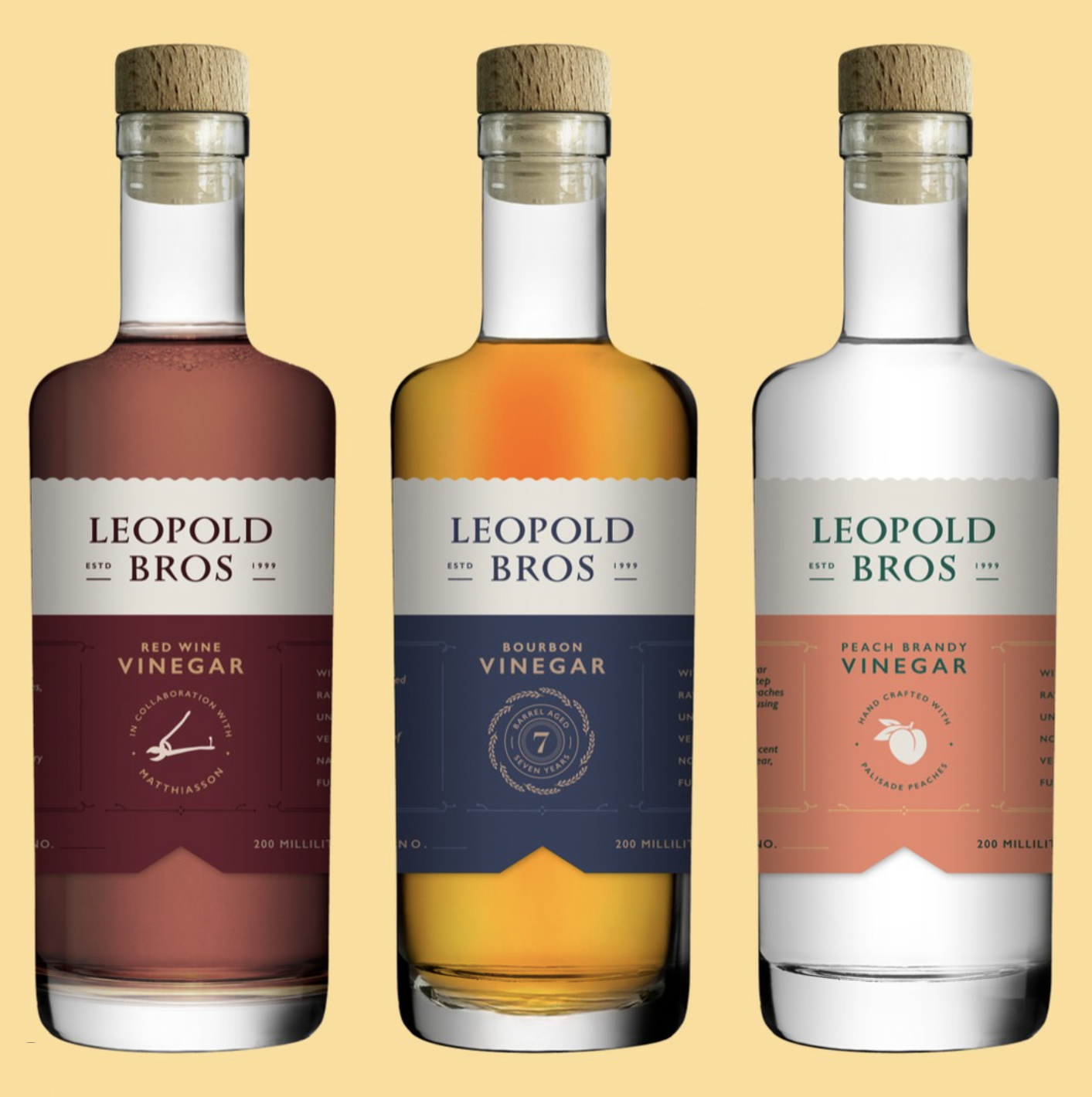
The company is currently selling three vinegars. The first is a 7-year-old bourbon vinegar. The wheated bourbon (made from mostly corn with a touch of wheat), already drinkable on its own at seven years of barrel aging, was dripped through the bacteria-and-beechwood vat, converting all the ethanol into acetic acid.
The website declares, “There have been many types of vinegar created over the centuries, but we believe this is the first bourbon vinegar ever brought to market.”
As to how to use this vinegar in food and beverage, they say it works well in “Carolina-style barbecue and meat marinades, desserts, shrub cocktails, or in a robust vinaigrette.”
The second vinegar is a three-chamber distilled peach brandy vinegar that was inspired by an 1872 pamphlet that Todd Leopold found, describing using brandy to create a more fragrant vinegar than just fruit wine.
This vinegar is suggested to be used “with fresh peaches and burrata, or with soda water for a refreshing spritz.”
The third Leopold Bros vinegar is not a distilled one but made from red wine in a collaboration with Matthiasson wines from Napa Valley. Leopold Bros had previously partnered with Matthiasson on a sweet vermouth. “Try this in salad dressings, or drizzle on potato chips,” they say.
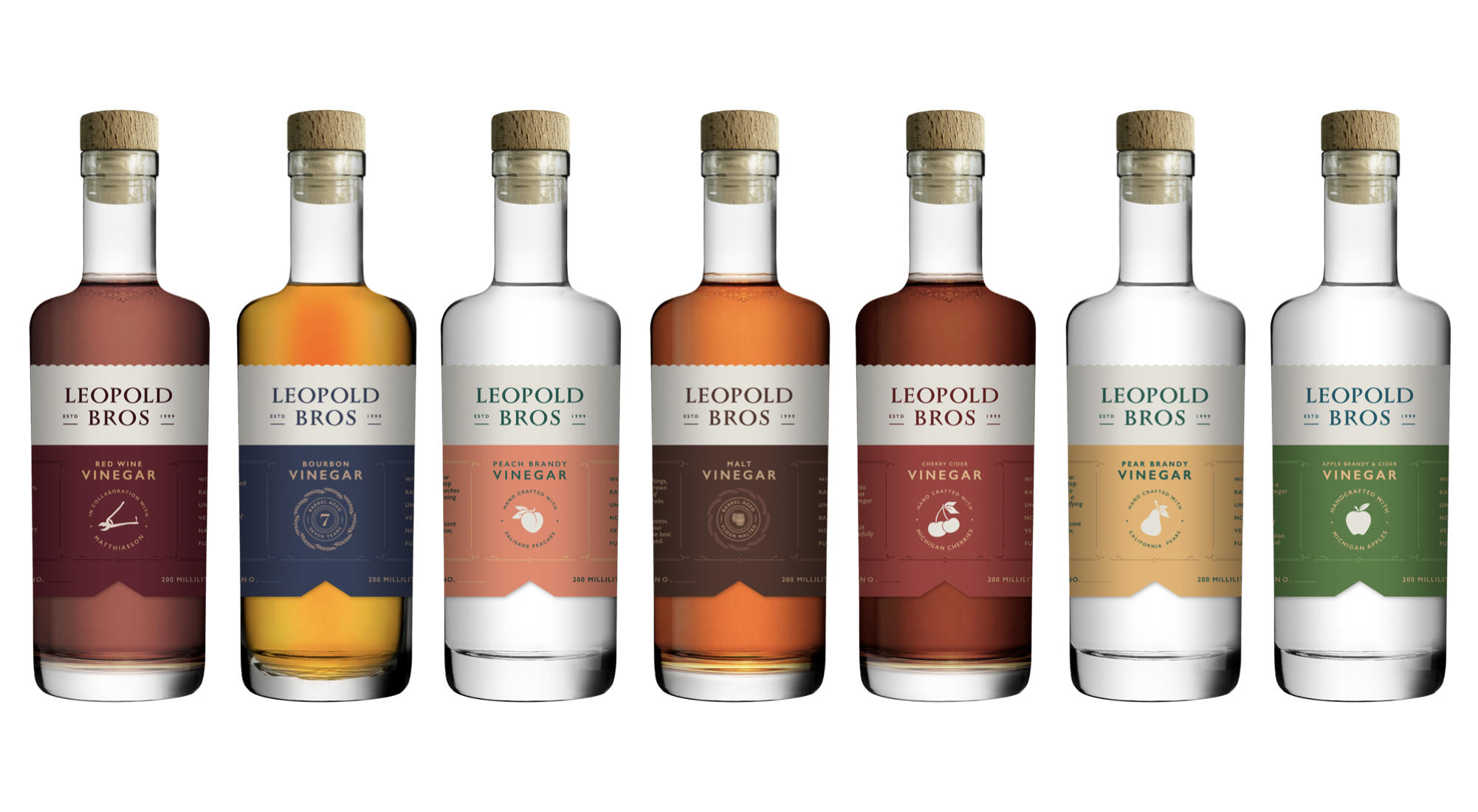
These three vinegars are currently on the market, but the website teases with photo mockups of a malt vinegar, cherry cider vinegar, pear brandy vinegar, and an apple brandy and cider vinegar.
A brand representative said that these future products will go into production later this year and take months to produce. It’s a long process to make this vinegar, and for its fans it’s going to seem like a long wait.